





Obsolescence Is the Original Villain
Let’s be clear: the central theme of *Toy Story* has never been the joy of playtime. It’s always been the terror of its absence. From the moment Buzz Lightyear unboxed himself in 1995, Woody’s existence has been defined by the threat of obsolescence.
*Toy Story 2* deepened this with Jessie’s heartbreaking ballad of being forgotten by her owner, Emily, and the sterile perfection of life as a collector’s item—a life devoid of purpose. *Toy Story 3* literalized the fear, sending the gang tumbling toward a fiery incinerator, the ultimate symbol of being discarded and deemed worthless. The franchise has always been a meditation on purpose, love, and the existential dread of being left behind. Each film has simply escalated the stakes. A new, cooler toy is one thing. An owner growing up is another. But the threat looming over a potential fifth installment is something else entirely. It’s not about being replaced by another toy; it’s about being replaced by a different mode of existence.
The iPad in the Room
The true, modern-day anxiety isn’t that a child will get a cooler action figure for their birthday. It’s that they won’t want an action figure at all. The fear is the tablet, the phone, the VR headset, and the endless scroll of digital content. This is the ‘nobody plays with toys anymore’ anxiety mentioned in the headline, a palpable fear for parents and, it turns out, a potentially devastating plot point for a group of sentient toys. How can a pull-string cowboy or a plastic space ranger compete with the infinite stimulation of the internet? Previous antagonists in *Toy Story* were, at their core, relatable. Stinky Pete was bitter from neglect. Lotso was twisted by a feeling of betrayal. They operated on the same plane of reality as our heroes. A tablet does not. It is an unthinking, unfeeling monolith of attention-sucking power. It has no tragic backstory. It simply *is*. This new conflict wouldn't be toy-versus-toy; it would be toy-versus-apathy, a battle against a world that has fundamentally changed the definition of “play.”
What 'Brutal' Could Actually Look Like
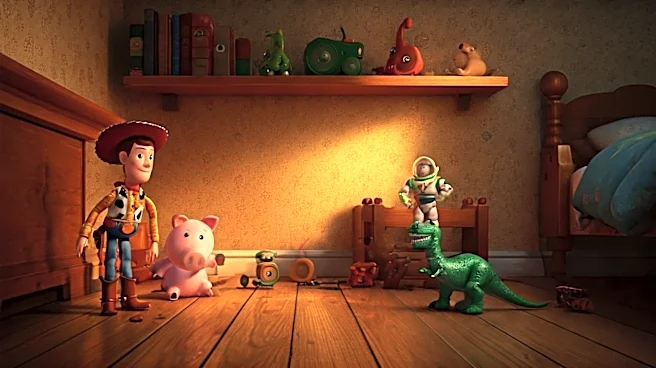
A “brutal” *Toy Story 5* might not involve a malicious villain or a near-death experience. The brutality could be quieter, sadder, and far more familiar to a modern audience. Imagine Buzz, Jessie, and the gang not in a daycare or an antique store, but on a shelf in a playroom where the child’s attention is permanently fixed on a glowing screen. The horror wouldn’t be a chase sequence; it would be the silent, excruciating waiting for a playtime that never comes. The conflict would be internal: Do they try to win the child’s attention back? Do they accept their new reality as mere decoration? This is a far more complex and emotionally devastating challenge than anything they’ve faced before. It forces the toys—and the audience—to confront a bleak possibility: that their purpose is not just threatened, but perhaps already extinct. The struggle is no longer to be the *favorite* toy, but to be a toy at all in a world that may have outgrown the very concept.
Woody's Prophetic Escape
This is where the controversial ending of *Toy Story 4* becomes fascinatingly relevant. By choosing to leave Bonnie and become a “lost toy” with Bo Peep, Woody already opted out of the system. He found a new purpose not tied to a single child but to helping other toys find their place. At the time, it felt like a bittersweet farewell. In the context of *Toy Story 5*, it could look like a prophetic escape. Woody got out before the great irrelevance hit. A new film could see Buzz and the others wrestling with their fading purpose while Woody thrives in a world outside the traditional playroom. This sets up a powerful emotional core: Does Buzz follow Woody’s path and abandon the very principle—loyalty to one kid—that has defined him? Or does he lead the gang in a desperate, possibly doomed, fight to prove that real toys still matter?