





The World Before 'Skinny'
To understand the earthquake of Hedi Slimane's early work at Dior Homme, you have to remember what menswear looked like at the turn of the millennium. The dominant silhouette was bulky, a holdover from the 90s defined by broad-shouldered suits, baggy
pants, and a muscular ideal. Fashion houses had menswear lines, but they were often a commercial afterthought, creatively dormant compared to the spectacle of womenswear. Slimane, who had already caused a stir at Yves Saint Laurent with his slim 'Black Tie' collection, arrived at Dior in 2000 with a radically different point of view. He wasn't interested in the established male archetype; he was obsessed with the raw, nervous energy of youth culture, particularly the indie rock scenes of London and Berlin.
The Birth of Dior Homme
Slimane was given the keys to a house that, under Patrick Lavoix, lacked a strong creative identity in menswear. He renamed the line from Dior Monsieur to Dior Homme, a seemingly small change that signaled a total reinvention. His vision was uncompromising. He cast his shows not with brawny models but with reed-thin, androgynous boys, many of them plucked from the street or music venues. His studio became a laboratory for a new silhouette: razor-sharp, painfully narrow, and unapologetically romantic. The shoulders were tiny, the armholes high, and the trousers clung to the leg. It was a look that wasn't just about clothes, but about an attitude—a fragile, defiant coolness.
The Show That Changed Everything
While several of his early Dior Homme shows were pivotal, collections like Spring/Summer 2002's “Boys Don't Cry” and Fall/Winter 2002's “Reflexion” crystallized his vision. Imagine a stark, brightly lit runway. Instead of the usual upbeat house music, the soundtrack was a raw track from an underground band like Readymade FC. Out came young men in suits so slender they seemed painted on, paired with skinny ties and pointed boots. It was a direct contradiction to everything mainstream menswear stood for. The look was severe yet elegant, drawing on the iconography of rock legends like David Bowie and the stark modernism of European art. The initial reaction was a mix of shock and exhilaration. Some critics were skeptical, but for a new generation, it felt like a revolution.
The Shockwave and Lasting Legacy
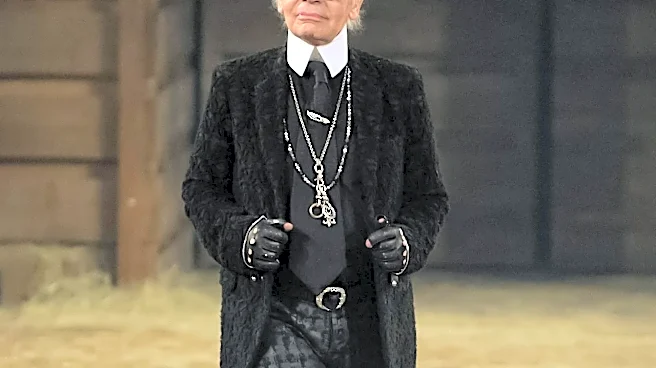
The impact was immediate and seismic. Slimane's silhouette didn't just influence other designers; it changed how men wanted to look. The demand for his clothes was so intense that the legendary Karl Lagerfeld famously shed 90 pounds just to be able to fit into a Dior Homme suit. Celebrities from Brad Pitt, who wore a custom Slimane suit for his wedding, to rock bands like The Strokes and Franz Ferdinand adopted the look, catapulting it into the mainstream. Suddenly, skinny jeans for men weren't a subcultural quirk; they were the new uniform. Slimane had single-handedly made thinness the new masculine ideal in high fashion, a move that would define the aesthetic of the 2000s and early 2010s and solidify his status as one of the most influential—and controversial—designers of his time.