







The Era of the 'Respectable' Black Suit
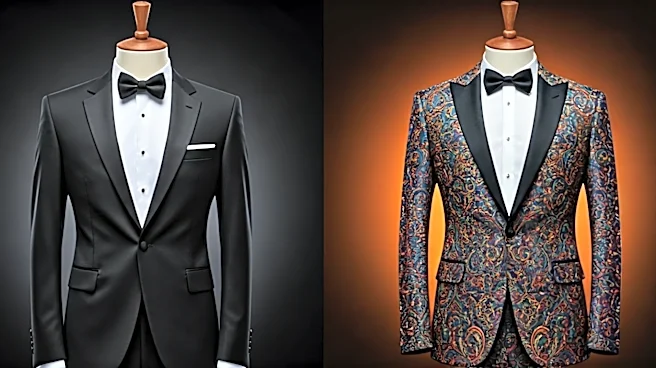
Cast your mind back to the AMAs of the 1980s and 90s. For every Prince in a ruffled shirt or Michael Jackson in a military-inspired glitter jacket, there were dozens of male artists adhering to a strict, unspoken dress code. The goal was to look respectable, successful, and classically masculine. The uniform was the black suit or tuxedo—a look borrowed from Hollywood’s golden age, not music’s rebellious spirit. It was sharp, safe, and utterly anonymous. This was the era where standing out was often seen as a risk, and fitting in was a sign of having truly 'made it.' The suit was a symbol of transitioning from a scrappy artist to a polished industry titan. Even hip-hop pioneers, known for their street style, would often clean up for the red carpet
in formalwear that felt more boardroom than backstage.
The Y2K Casual Rebellion
The turn of the millennium didn't immediately usher in embellished tailoring, but it did shatter the black-suit monopoly. The new rebellion wasn't about being fancier; it was about being more casual. Think of the late '90s and early 2000s boy bands and rock acts. The red carpet became a parade of ill-fitting, light-wash denim, leather pants, oversized blazers, and frosted tips. It was the era of *NSYNC's coordinated chaos and Fred Durst’s backward red cap. While not exactly a high point for sartorial elegance, this period was crucial. It broke the formalwear mold and asserted that artists could bring their personal, off-stage style directly onto the red carpet. It established a new baseline: you didn't have to wear a tux to be taken seriously at an awards show. This laid the groundwork for more personal, and eventually more ambitious, fashion choices.
The Instagram Effect and Stylist Power
The 2010s changed the game entirely with two key developments: the rise of the power stylist and the explosion of social media. Suddenly, the red carpet wasn't just a 30-second clip on TV; it was a permanent, shareable, and highly scrutinized moment on Instagram. A safe black suit was forgettable—it wouldn't get reposted, trend on Twitter, or land in a 'Best Dressed' gallery on a major publication's website. Celebrity stylists like Law Roach and Ilaria Urbinati became key players, using fashion to build an artist’s brand. They encouraged their male clients to take risks, knowing that a bold look—whether loved or hated—generated buzz. The red carpet became a competitive sport in personal branding, and the 'boring' suit was a guaranteed way to lose.
Today's Embellished, Expressive Tailoring
Which brings us to today. The current era of AMAs menswear is the culmination of all these shifts. Artists like Lil Nas X, Machine Gun Kelly, and Bad Bunny use the red carpet as a performance space. Their fashion is an extension of their art, challenging traditional notions of masculinity with every sequin, pearl necklace, or pop of neon pink. We see intricately embroidered suits, sheer fabrics, cropped jackets, and silhouettes that play with gender norms. This isn't just about looking different; it's a statement. It reflects a broader cultural shift where authenticity and personal expression are valued above conformity. The 'embellished tailoring' of today signals that a male musician’s power lies not in fitting a traditional mold of masculinity, but in creating a unique, unforgettable identity of their own.