



The Argument for Democratic Design
For one camp of designers, the T-shirt dress is the pinnacle of accessible, democratic fashion. Its beauty lies in its simplicity. At its best, it’s a blank canvas, a starting point for personal expression that doesn't try to overpower the wearer. Proponents
argue that its roots in the simple T-shirt make it inherently cool, casual, and modern. It’s a single garment that promises total comfort without sacrificing the baseline requirement of being dressed. Designers in this camp see the T-shirt dress as a testament to the idea that great design doesn't have to be complicated. They celebrate its versatility; it can be styled with sneakers for a weekend errand or dressed up with a jacket and heels for a more polished, work-appropriate look. In this view, the dress isn't lazy—it’s liberating.
The Critique of the 'Shapeless Sack'
On the other side of the aisle are designers who view the T-shirt dress with skepticism, if not outright disdain. For them, the garment’s defining characteristic—its lack of structure—is its greatest design flaw. Critics argue that the typical T-shirt dress, often cut like a long, straight tube, is inherently unflattering on many body types. They contend that it can easily look frumpy or sloppy, more like sleepwear than a considered outfit. This perspective holds that good design is about enhancing the human form through silhouette, drape, and tailoring. A simple T-shirt dress, they argue, often fails this test, ignoring the body's curves rather than celebrating them. The debate often comes down to a philosophical clash: is the purpose of clothing to provide a blank canvas, or is it to create a specific, flattering shape? For these designers, the T-shirt dress often represents a missed opportunity for true design.
It’s All in the Details (and the Fabric)
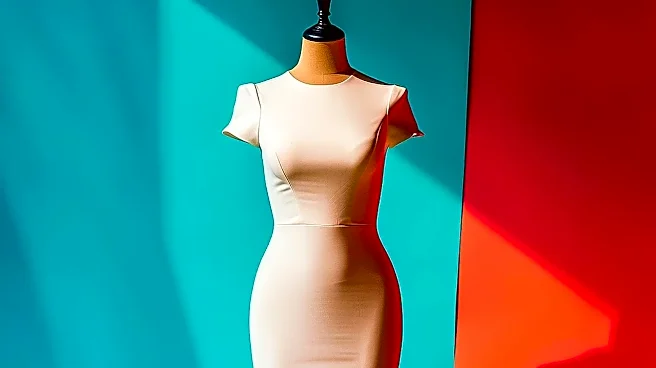
The truth, as with most fashion debates, lies somewhere in the middle—and it's all about the execution. The designers who successfully elevate the T-shirt dress are masters of nuance. A cheap, thin cotton jersey will cling and bunch in all the wrong places, validating the critics' worst fears. However, a dress made from a heavier pima cotton, a structured knit, or even silk can drape beautifully, skimming the body rather than clinging to it. The cut makes all the difference. A simple shift in the shoulder seam, a slightly more defined waist, or subtle side slits can transform the garment from a shapeless tube into an elegant, minimalist statement. Many modern designers are reinterpreting the staple with these details in mind, using ruching, asymmetrical hems, or unique sleeve shapes to add structure and interest. This suggests that the disagreement isn't about the idea of a T-shirt dress, but about the vast difference between a well-made one and a poorly executed one.
The Styling Dilemma: Effortless vs. Effortful
Ultimately, the argument also extends to styling. For its fans, the ability to simply throw it on and go is the entire point. It’s the epitome of effortless chic. But for its detractors, making a basic T-shirt dress look truly stylish requires a surprising amount of effort. You might need the perfect belt to create a waist, a jacket to add structure, or bold accessories to keep it from looking bland. At that point, is the dress really that “easy” at all? This paradox is central to the debate. One designer sees a versatile foundation piece, while another sees an incomplete garment that needs other items to make it work. It highlights a fundamental split in fashion philosophy: should a garment stand on its own, or is its value determined by how well it can be integrated into a larger, styled look?