






15. The Return of the High-Slit
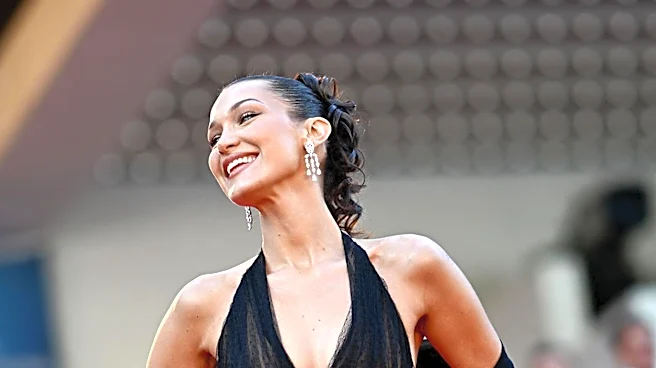
Let's be clear: the high-slit never really went away. But in the 2010s, it came back with a vengeance, redefined not as a mere suggestion of leg but as a daring architectural element. Bella Hadid’s 2016 appearance in a scarlet Alexandre Vauthier gown with a slit that traveled past the hip bone became an instant, iconic Cannes moment. It wasn't just sexy; it was a feat of engineering and confidence. This new, extreme slit shifted the focus from classic draping to a high-wire act of tailoring, influencing countless red carpet looks that prized audacity as much as elegance.
12. The Power Jumpsuit Arrives
For decades, the Cannes dress code was notoriously strict, favoring traditional gowns. The rise of the formal jumpsuit was a quiet rebellion. While others had worn them, Julia
Roberts cemented the jumpsuit’s A-list status in 2016. Her off-the-shoulder Armani Privé number was impossibly chic, but the real statement was her decision to go barefoot, a protest against the festival's unofficial (and controversial) heels-only policy. The look—and the act—proved that power dressing on the Croisette no longer required a skirt. It was about confidence, comfort, and changing the rules from within.
10. The Two-Piece Gown
Deconstructing the gown into a top and skirt was one of the decade's freshest moves. This wasn't the midriff-baring look of the early 2000s, but a sophisticated, often formal, pairing. Marion Cotillard embraced this with a navy Dior Haute Couture two-piece in 2021, featuring a bustier and a voluminous balloon skirt. The silhouette allowed for a play on proportions—a tight top with a huge skirt, or vice versa—and gave stars a modern, versatile way to approach black-tie dressing. It separated the elements of a gown, treating each as a statement piece in its own right.
8. The Sculptural Peplum
The peplum had a bad rap for a while, associated with dated office wear. But on the Cannes red carpet, designers reclaimed it as a tool for high-drama architecture. Cate Blanchett's 2018 Armani Privé gown is the prime example. It wasn't a gentle ruffle but a bold, sculptural element that created an entirely new, almost avant-garde shape around the waist. This revival treated the peplum not as a frill, but as a structural foundation, turning the wearer into a walking piece of art and proving that no trend is ever truly dead—it just needs a brilliant reimagining.
5. The Statement Cape
Nothing says 'I have arrived' quite like a cape. Once reserved for superheroes and royalty, the cape became a major silhouette shifter at Cannes, adding a dose of theatricality and grandeur. Lupita Nyong'o's spinning moment in a green Gucci gown in 2015 is unforgettable, but the trend has had long-lasting power. It transforms a simple column dress or gown into a dynamic, flowing masterpiece. Whether worn over the shoulders or integrated into the dress itself, the cape adds movement, power, and a sense of occasion that feels perfectly suited to the festival's epic scale.
3. The 'Naked' Dress, Elevated
The 'naked' dress is all about illusion—the suggestion of nudity through sheer fabrics, intricate beading, and strategic embroidery. While it can sometimes veer into tackiness, Cannes saw its elevation into an art form. Bella Hadid again, this time in a Schiaparelli Haute Couture gown from 2021, featured a lung-shaped gold necklace covering her bare chest. It was surreal, provocative, and breathtakingly artistic. This new wave of illusion dressing wasn't just about showing skin; it was about using the body as a canvas for high-concept design, pushing the boundaries of what a formal gown could be.
1. The Reclaimed Princess Gown
For a time, the classic, full-skirted princess gown felt almost too obvious for fashion-forward stars. But the last decade saw its powerful reclamation. Stars and their stylists started choosing fairy-tale silhouettes again, but with a modern, self-aware twist. Blake Lively’s 2016 appearance in a pale blue Vivienne Westwood ballgown while pregnant is the perfect encapsulation. It was Cinderella, but updated—a powerful woman choosing to embrace a traditionally feminine silhouette on her own terms. It symbolized a shift away from needing to be edgy and toward the confidence to wear whatever feels most magnificent, making the ultimate statement of owning your own fantasy.