








First, Make It Fun
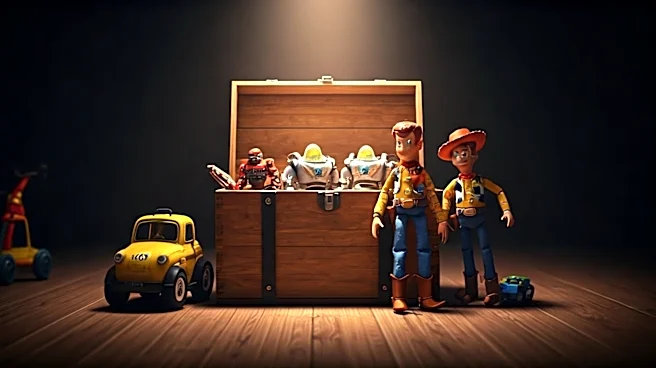
Let’s get the obvious out of the way: *Toy Story 5* absolutely has to work as a kids’ movie. It needs bright colors, thrilling set pieces, funny one-liners from Rex and Mr. Potato Head, and a simple, understandable plot. The core mission of any *Toy Story*
film is to captivate children, to make them believe their own toys spring to life the second they leave the room. This is the price of admission. Without the giggles of a five-year-old watching Buzz Lightyear attempt a daring-but-doomed stunt, the entire enterprise falls apart. This is the 'kids’ adventure' part of the equation, and it’s non-negotiable. Pixar is the best in the business at this, so it’s the easiest part of the challenge to trust them with. The real test is what they do for the rest of us.
The End of the End
For many, *Toy Story 3* was the perfect conclusion. Andy, the boy we grew up alongside, passed his cherished toys to a new child, Bonnie. It was a gut-wrenching, perfect ode to the passage of time and the grace of letting go. It was an ending. Then, *Toy Story 4* arrived, giving Woody his own ending—a choice to leave the life he knew for a new purpose with Bo Peep. It was a post-credits scene to a closed book, a meditation on what happens *after* you’ve fulfilled your primary purpose. Announcing a fifth film feels like tempting fate. It risks undoing the emotional weight of not one, but two, powerful goodbyes. To justify its existence, *Toy Story 5* can't just be *another* adventure. It has to confront the very reason it feels so strange for it to exist: what happens when the story just keeps going, long after you thought it was over?
The Real 'Warning Label' for Parents
This is where the 'parent’s warning label' comes in. The original audience for *Toy Story*—the kids who saw it in 1995—are now the parents taking their own children to the theater. For them, the franchise is no longer about the fear of being replaced by a shiny new toy. It’s about the quiet, creeping realization that you are now Andy’s mom. You are the one watching your child’s obsessions shift, packing away old friends, and facing the silent, accelerating march of time. The warning label isn’t for the toys; it’s for us. It’s a beautifully painful reminder that our kids’ childhoods are finite, that our role is to love them, guide them, and eventually, let them go find their own adventure, just as Andy did. *Toy Story 5* must lean into this. It must be a story that makes parents hug their kids a little tighter in the theater, not just out of love, but out of a profound understanding of what’s to come.
Why a Simple Adventure Isn't Enough
A film that ignores this dual-audience dynamic would be a betrayal of the franchise’s soul. A simple, consequence-free romp where Woody and Buzz reunite for one last job would feel hollow, a soulless cash-grab designed for merchandise sales. It would be an admission that Pixar has forgotten what made *Toy Story* special in the first place. The magic was never just about talking toys; it was about using those toys to explore deeply human anxieties about mortality, purpose, and obsolescence. If *Toy Story 5* is just a fun cartoon, it will fail. To succeed, it must weaponize our nostalgia not to comfort us, but to challenge us. It must look the Millennial parents in the audience squarely in the eye and, through the adventures of a pull-string cowboy, reflect our own hopes and fears about raising the next generation in a world that feels increasingly complex and uncertain.