





Beyond the Toga and Sandal
Let’s be honest: when you hear “classical literature adaptation,” you probably picture stilted dialogue, dusty sets, and a general air of being homework. For decades, Hollywood’s approach to the epics of Homer, Virgil, and the great tragedians has been
to either wrap them in reverence, creating museum pieces that feel distant, or to oversimplify them into generic action movies that miss the point entirely. Recent attempts to “modernize” classics by injecting contemporary slang or flattening complex characters have often been met with criticism for prioritizing style over substance. The result is a cultural gap. Stories like The Odyssey—a foundational tale of wandering, identity, and vengeance—are relegated to English class syllabi instead of being treated as the thrilling, psychologically complex narratives they are. They lack the event-level appeal that turns a story into a pop culture phenomenon. This is where a filmmaker like Christopher Nolan comes in.
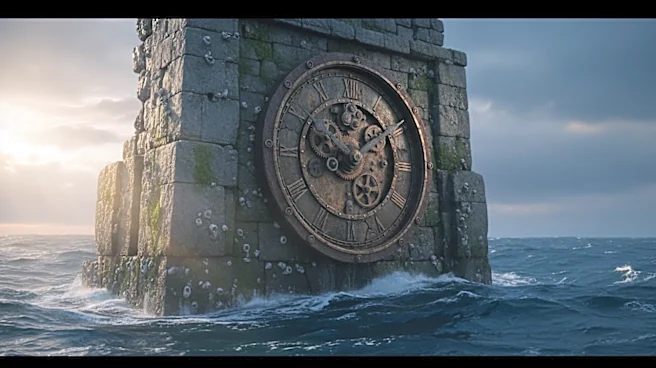
The Master of Broken Clocks
Christopher Nolan is obsessed with time. His films are famous for their non-linear structures, from the reverse-chronology of Memento to the interwoven timelines of Dunkirk and the layered temporalities of Inception. This isn't just a stylistic quirk; it's a narrative tool used to immerse the audience in the characters' subjective experiences of reality. Now, consider The Odyssey. The epic doesn't unfold in a straight line. Much of Odysseus's journey is told in flashback, a story within a story, as he recounts his adventures to a captive audience. This structure, with its nested narratives and temporal leaps, is practically begging for a Nolan-esque treatment. Imagine a cinematic adaptation where the ten years of wandering, the struggles of Telemachus at home, and Odysseus's bloody return to Ithaca are all cross-cut, building tension in the signature Nolan style. His ability to make complex timelines feel urgent and emotionally resonant could transform the epic's structure from an academic point of interest into a gripping narrative engine.
Spectacle with a Soul
Nolan is a champion of practical effects and IMAX-scale filmmaking, creating a sense of tangible, weighty reality in his blockbusters. Think of the rotating hallway in Inception or the visceral space travel of Interstellar. This isn't just spectacle for its own sake; it’s a way to ground fantastical concepts in a believable world. This approach would be revolutionary for classical literature. Instead of a CGI Cyclops that feels weightless, imagine a towering creature brought to life with the same practical grit Nolan applies to his set pieces. Picture the journey into the Underworld, not as a green-screen fantasy, but as a physically daunting expedition into darkness. Nolan builds intellectual puzzles inside of blockbuster frameworks. The gods and monsters of ancient myth, when filtered through his lens, could become less about fantasy and more about facing tangible, awe-inspiring forces that test the limits of human endurance and sanity—a core theme in epics like The Aeneid, which pits a hero's resolve against divine intervention and the chaos of war.
Gods, Men, and Moral Gravity
At their heart, Nolan's films are explorations of human morality under extreme pressure. From the impossible choices in The Dark Knight to the world-altering responsibility in Oppenheimer, his characters are often obsessive, emotionally disturbed, and morally ambiguous. This focus on complex ethics is a perfect fit for the world of classical literature. The Greek and Roman gods are not paragons of virtue; they are petty, jealous, and manipulative, meddling in human affairs for their own reasons. Heroes like Achilles and Aeneas are driven by deeply personal and often conflicting motivations like honor, piety, rage, and duty. Nolan's talent lies in making these philosophical explorations feel like high-stakes thrillers. He could frame Aeneas's conflict between his love for Dido and his divine fate to found Rome not as a dusty legend, but as an intense psychological drama with world-historical consequences. He could make the audience feel the crushing weight of fate and the impossible burden of being a hero, reminding us that these ancient characters are grappling with the same questions of choice and consequence that we face today.