





More Than Just a Game
To understand the goal, you have to understand the moment. The 1986 World Cup quarter-final between Argentina and England wasn't just a soccer match; it was a proxy battle charged with political tension. Only four years earlier, the two nations had fought
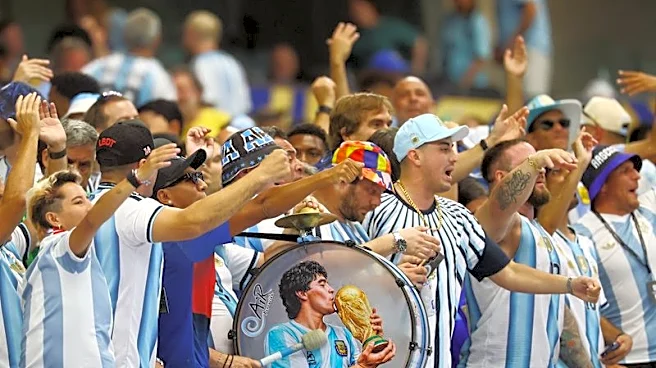
the Falklands War, a brief but bitter conflict over islands in the South Atlantic known to Argentinians as Las Malvinas. The wounds were still raw. For Argentina, a victory on the world’s biggest sporting stage was a chance for symbolic revenge. At the center of it all was one man: Diego Armando Maradona, a 5'5" force of nature who was, by then, universally acknowledged as the greatest player on the planet. He carried the hopes of a nation on his shoulders in Mexico City’s Azteca Stadium.
The Moment of Infamy
Six minutes into the second half, the game was deadlocked at 0-0. Maradona, weaving his way toward the English penalty area, played a short pass that was deflected high into the air by an English defender’s mistimed kick. The ball looped down near the goal, where England's towering goalkeeper, Peter Shilton, went up to punch it clear. But Maradona, eight inches shorter, had continued his run. He leaped at the same time, not with his head, but with his left fist raised slyly beside it. He punched the ball over Shilton’s outstretched hands and into the back of the net. The English players immediately swarmed the Tunisian referee, Ali Bin Nasser, frantically signaling for handball. But from his angle, Bin Nasser believed Maradona had headed it in. He pointed to the center circle. The goal stood.
The Birth of the 'Hand of God'
In the chaos, Maradona instinctively knew he had to sell the moment. He ran to the corner flag, celebrating as if it were the most legitimate goal of his life, urging his teammates to mob him before the referee could have second thoughts. They obliged. After the match, the controversy was all anyone could talk about. When reporters cornered Maradona and asked if he’d used his hand, he delivered a line for the ages. The goal, he said, was scored "un poco con la cabeza de Maradona y otro poco con la mano de Dios"—a little with the head of Maradona and a little with the hand of God. The phrase was perfect. It was a cheeky confession wrapped in a claim of divine justice. For his adoring fans in Argentina, it wasn't a cheat; it was a clever, almost mythical act of defiance against a powerful foe.
Four Minutes of Pure Genius
What makes the “Hand of God” so legendary is what happened just four minutes later. As if to silence any debate about his greatness, Maradona scored what many still call the “Goal of the Century.” Receiving the ball in his own half, he pirouetted and embarked on a slaloming 60-yard dash, gliding past five English defenders as if they were training cones before rounding the keeper and slotting the ball home. One goal was an act of cunning illegality; the next was an act of transcendent genius. In the span of four minutes, Maradona had encapsulated his entire legacy: the flawed rogue and the sublime artist, all in one. Argentina won the match 2-1 and went on to win the World Cup. The two goals, forever linked, defined his triumph.