
Beyond the 'Boo Box'
Anyone can build a dark hallway and have someone jump out. That’s the simplest form of a haunted house—what industry pros sometimes call a “boo box.” It’s a basic, repeatable scare. And while a well-timed jump scare is an essential tool, a house built
entirely on them is like a movie that's just a string of explosions. It’s momentarily startling but ultimately hollow. The greatest haunted attractions, particularly those crafted by the masters at Universal's Halloween Horror Nights, understand that true terror isn’t just about surprise; it’s about suspense. It's the creeping dread that builds long before the monster appears. That feeling is the product of deliberate, careful storytelling—a cinematic journey packed into a five-minute walk. The secret ingredient isn’t more gore; it’s a script.
Act One: Setting the Stage
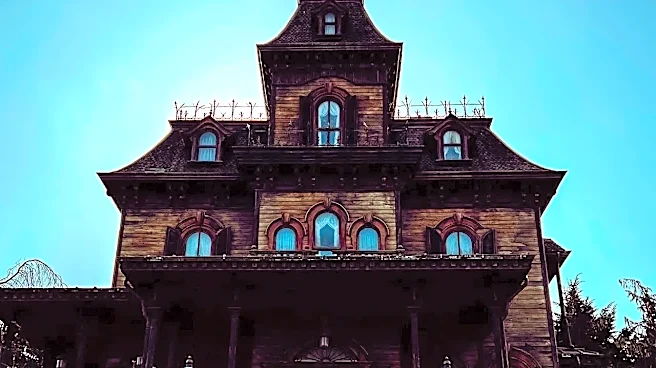
Every great film’s first act establishes its world, tone, and the central conflict. A great haunted house does the same. The facade you wait in front of isn't just for crowd control; it’s the establishing shot. It tells you the story's genre—a gothic mansion, a crashed spaceship, a derelict cabin. The first few rooms continue this work. They immerse you in the environment and set the rules. You might hear a distant scream, see unsettling graffiti on a wall, or notice that the flickering lights create a specific, unnerving rhythm. This is where the tension begins to coil. Instead of a major scare right at the entrance, the best houses use these opening moments to let your own imagination do the heavy lifting. They establish a baseline of 'normal' for this twisted world before methodically tearing it apart.
Act Two: Raising the Stakes
This is where the screenwriter’s craft becomes most critical. In a movie, the second act is about complication and escalation. The hero’s problems get worse, the villain gets closer, and the stakes get higher. In a haunted house, this translates to a tangible progression of threat. The monster you only glimpsed in the first section is now actively hunting you. The unsettling environment becomes openly hostile—walls might seem to close in, floors become unstable, or you’re forced into tighter, more claustrophobic spaces. The narrative deepens as the scares become more intense and more personal. A house based on a film might move from referencing the movie's early, subtle scares to recreating its most intense sequences. An original concept house will reveal more of its story, showing the gruesome fate of those who came before you. Each room should feel like a direct consequence of the one before it, a steady climb up a roller coaster's lift hill, with each clank of the chain ratcheting up the dread.
Act Three: The Climax and the Aftershock
No story can escalate forever. It needs a peak—a climax where the tension finally breaks. In a haunted house, this is the grand finale. It’s the chamber where you finally come face-to-face with the primary threat in its most powerful form. It should be an overwhelming sensory experience—a convergence of sound, lighting, and performance designed to be the most memorable scare of the entire journey. But the story doesn't just stop there. Many of the most effective houses add a final 'button'—one last scare right as you think you've reached the safety of the exit. This aftershock serves as the story's dark punchline, sending you back into the park with your heart still racing. It’s the horror movie equivalent of the killer’s hand bursting from the grave in the final shot, a lasting reminder of the narrative you just survived.