


The Unseen Blueprint of Terror
When we talk about rules for monsters, we're not just talking about a convenient weakness like a silver bullet or a stake through the heart. We're talking about the fundamental laws of their existence. What motivates them? How do they hunt? What are their limitations?
These principles are the bedrock of suspense. A monster that can do anything at any time is just a chaotic plot device. But a monster bound by a specific nature feels like a real, living part of its world, which is infinitely more frightening. This creative constraint forces writers to be clever and allows the audience to engage with the threat on a deeper level. We're not just watching the characters run; we're trying to figure out the puzzle of survival alongside them.
Case Study in Clarity: The Demogorgon
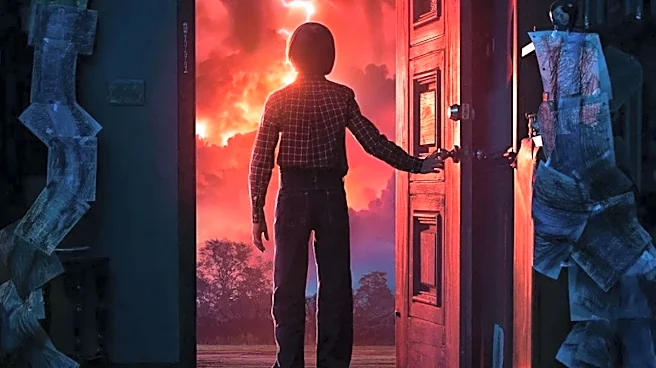
Look no further than the Demogorgon from Stranger Things. Its rules are simple but ruthlessly effective. It's a predator from a parallel dimension, the Upside Down. It is drawn to the scent of blood, which allows it to cross between worlds. Its skin is tough enough to withstand gunfire, but it has a significant weakness: fire. These are not just random traits; they are narrative tools. Because the characters learn the Demogorgon is attracted to blood, they can create a trap. Because they know it fears fire, they have a weapon. The rules don't make the monster weaker; they empower the story, allowing for moments of strategy and sacrifice that are far more compelling than a simple jump scare. The creature's life cycle, from a slug-like larva to a full-grown predator, further grounds it in a twisted version of natural law.
When the Rules Get Fuzzy: The Smoke Monster
On the other end of the spectrum is the infamous Smoke Monster from Lost. In the beginning, it was terrifying precisely because it was a mystery. It produced mechanical, clanking sounds and remained unseen, felling trees and dragging people away. The lack of information was the source of its power. However, as the series progressed, its rules became increasingly vague and contradictory. It could seemingly scan people's memories, take the form of dead people, and was later revealed to be the Man in Black, a central figure in the island's mythology. But its limitations felt arbitrary; sometimes it couldn't pass a sonic fence, other times it seemed to go wherever it pleased. This inconsistency slowly eroded its menace. Instead of a defined threat, it became whatever the plot needed it to be at that moment, a symbol of mystery that lost its impact the more it was explained.
Rules Breed Cleverness, Not Just Combat
The best monster stories are about outthinking the threat, not just overpowering it. The iconic zombies in The Walking Dead follow a clear set of rules: they are slow, attracted to noise, and can only be stopped by destroying the brain. Everyone is already infected, meaning anyone who dies for any reason will turn. This consistent framework allows the survivors to develop tactics, like covering themselves in gore to mask their scent or using herds as a weapon. The horror comes from the humans' struggle to uphold these rules under pressure. A character hiding a bite, for example, creates immense dramatic tension precisely because we, and they, know the fatal consequence of breaking that rule. The rules turn the monster from a simple obstacle into a persistent, environmental threat that shapes the entire world and the characters within it.