


The Paralysis of Too Much Choice
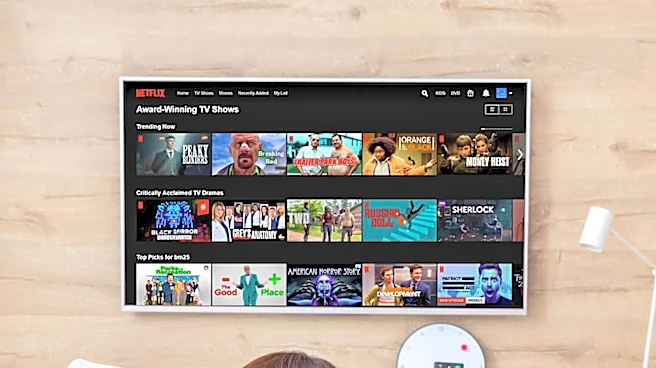
The promise of streaming was a library of everything, available anytime. The reality has become a cognitive burden. Psychologists call it "choice overload": when presented with too many options, our brains struggle to make a decision at all. It’s the
reason you can have access to 50,000 titles and feel like there’s nothing to watch. This decision paralysis turns leisure time into a chore, complete with post-choice regret and dissatisfaction. We spend more time searching than watching, a phenomenon so common it even has a nickname: "Netflix Syndrome." Cable, in its old-fashioned way, solves this. It presents a limited, pre-selected menu. Your only job is to flip, not to excavate.
The Lost Art of Human Curation
Streaming runs on algorithms that analyze your past behavior to predict what you want next. While sometimes helpful, this often creates an echo chamber, serving you an endless loop of similar content and walling you off from accidental discovery. Cable channels, by contrast, are curated by humans. A programmer, not a piece of software, decides that a classic movie should follow the nightly news or that a block of sitcoms is the perfect lead-in for a Friday night. This human touch provides rhythm and serendipity. It’s a shared experience, a throwback to a time when TV was a cultural touchstone rather than a solitary, fragmented activity. In an era of AI-generated everything, there's a growing appreciation for human taste and the simple act of letting someone else DJ for a while.
It's Not as Expensive as You Think
The original argument for cutting the cord was cost, but that math has changed dramatically. As streaming giants raise prices, introduce ads to paid plans, and crack down on password sharing, the costs stack up. By the time a household subscribes to three or four major services to get the variety of shows, movies, and sports they want, the monthly total can easily approach the cost of a basic cable package. Recent surveys show a significant number of consumers are canceling services due to price hikes and the hassle of managing multiple subscriptions. A cable bundle, once seen as bloated, now looks refreshingly simple: one bill for local news, live sports, and a broad mix of entertainment channels.
The Simple Joy of Channel Surfing
Beyond the economics and psychology, there’s an undeniable, almost meditative, pleasure in channel surfing. It’s a low-stakes, lean-back activity. You aren’t committing to a six-season series; you’re just dropping in on a cooking show for five minutes, catching the end of a basketball game, or stumbling upon a movie you loved 20 years ago. This random-walk discovery is something algorithms can't replicate. They are designed for engagement and efficiency, not for the happy accidents that lead you to something new. Channel surfing is the opposite of an optimized user experience, and in a world that’s constantly trying to optimize our every choice, that might be exactly what we need.