





This Year’s Emmys Look a Lot Like the Oscars
The nominations for the 78th Primetime Emmy Awards, held on September 14, 2026, read like a who's who of big-screen talent. Names typically associated with film marquees are now the front-runners in television's biggest night. We're seeing stars like Harrison
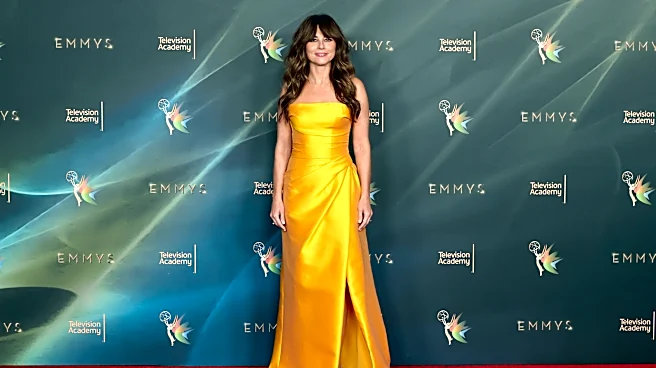
Ford nominated for his supporting role in the comedy series "Shrinking" and Carey Mulligan for the limited series "Beef". The trend continues with Sally Field in "Remarkably Bright Creatures" and Claire Danes in "The Beast in Me". It’s a deliberate migration of talent that has been building for years but has reached a fever pitch in 2026. The limited series categories, in particular, have become a playground for film actors, with nominations for performers like Charles Melton, David Harbour, and Linda Cardellini, who won for her role in "DTF St. Louis". This isn’t just a few movie stars dipping their toes in TV; it’s a full-scale creative takeover.
More Than Just a Streaming Service Payday
While the massive budgets of streaming services are certainly a factor, the reasons for this shift are more creative than financial. For decades, a stigma existed around TV for film actors; it was often seen as a step down. Today, that hierarchy has completely inverted. Television, especially the limited series format, offers actors the kind of complex, character-driven roles that have become increasingly rare in a film industry dominated by sequels and superhero franchises. A limited series provides a contained, eight-to-ten-episode arc, allowing an actor to explore a character with a depth that a two-hour movie rarely affords, without the multi-year commitment of a traditional network show. It's a format that offers the best of both worlds: a cinematic feel with the narrative real estate of television.
The Rise of Prestige TV, The Fall of the Adult Drama
This talent migration is directly linked to the changing economics of the movie business. The mid-budget drama—the character-focused, adult-oriented film—has been largely squeezed out of theatrical distribution. Studios now prioritize massive, billion-dollar bets, leaving a void for audiences hungry for intelligent, nuanced storytelling. Streamers and premium cable networks like HBO have eagerly filled that gap. Shows like HBO's "The Pitt," which swept the 2026 Emmys with 25 nominations, prove that audiences will flock to series that tackle complex ethical and social issues. These platforms have become the new home for the 'movie for adults,' and in turn, have become the new home for the actors who once starred in them. The pipeline isn't just pulling actors; it's pulling the entire genre of prestige drama from the big screen to the small one.
Redefining What It Means to Be a Star
The result is a complete blurring of the lines that once separated a 'movie star' from a 'TV star.' In 2026, power is defined by influence and creative control, not by the medium. Top-tier talent is no longer just for hire; they are executive producers shaping the stories they star in, moving fluidly between platforms to build a brand. Leading a critically acclaimed limited series can now generate more buzz and cultural relevance than a mid-level film. The Emmys have become a new battleground for Hollywood's most powerful players. The ceremony is no longer seen as the Oscars' less glamorous sibling but as a primary showcase for the most vital and ambitious storytelling happening today. The Television Academy itself seems to recognize this, with brands investing heavily in the Emmy season to connect with the stars who now drive global trends.