









The Understated World of Step Cuts
Before diving into the differences, it's important to understand what unites these two cuts. Both the emerald and the Asscher are 'step cuts.' Unlike the fiery sparkle of a brilliant cut diamond, which uses many small facets to maximize scintillation,
step cuts feature long, parallel facets arranged like a staircase. This architectural style doesn't try to be the loudest in the room; instead, it creates a mesmerizing 'hall-of-mirrors' effect. The look is one of sophisticated, understated glamour, emphasizing the diamond's clarity and cool, white luster over fiery brilliance. This shared foundation is where their paths begin to diverge, leading to different considerations for an investor.
The Emerald Cut: A Window to Perfection
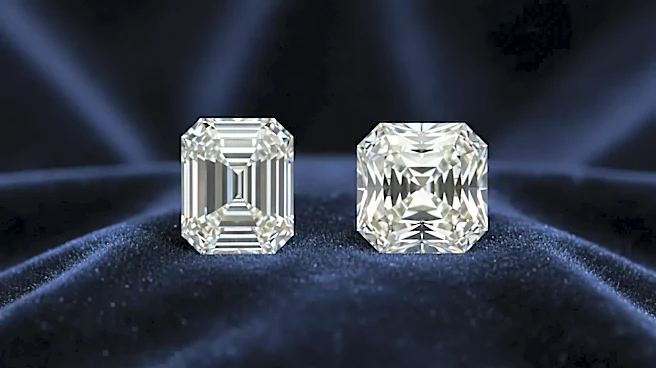
The emerald cut is defined by its elegant, rectangular shape and cropped corners. Its long, open table—the large, flat facet on top—acts like a clear window into the heart of the stone. This is both its greatest strength and its most demanding characteristic. An emerald cut beautifully showcases a diamond of high clarity and color, but it's also unforgiving of flaws. Inclusions that might be hidden by the sparkle of a brilliant cut are much more visible here. For an investor, this means a top-quality emerald cut is a statement of purity, but it requires a higher investment in clarity (typically VS1 or better) to achieve that flawless look. Its elongated shape also tends to look larger for its carat weight and can make the wearer's finger appear longer and more slender.
The Asscher Cut: A Hypnotic Piece of History
Developed in 1902 by the Asscher brothers of Holland, the Asscher cut is a square-shaped stone with deeply trimmed corners that give it an almost octagonal appearance. It reached peak popularity during the Art Deco era, and its geometric precision remains a hallmark of vintage elegance. What truly sets it apart is the unique facet pattern that creates a mesmerizing 'windmill' or 'X' shape, drawing the eye inward. This effect gives the Asscher a bit more brilliance and life than an emerald cut. From an investment standpoint, the Asscher has a few key advantages: it's rarer than the emerald cut, making up only about 2% of diamonds worldwide, and its complex faceting can be slightly more forgiving of minor inclusions than the emerald's wide-open window.
Value Proposition: Rarity vs. Visual Size
When weighing these two as investment pieces, the trade-off becomes clear. The emerald cut often provides a greater 'face-up' size for its carat weight, meaning it can look larger than an Asscher of the same weight. This makes it a compelling choice for those focused on visual impact per dollar spent. However, well-proportioned Asscher cuts are rarer on the market. Rarity is a significant driver of long-term value in the diamond world. While an emerald cut might seem like a better value initially due to its perceived size, the scarcity and distinctive, historic appeal of a high-quality Asscher can make it a more coveted piece for collectors and connoisseurs over time. While some sources note Asscher cuts can be slightly more expensive per carat due to the precision cutting involved, others find them comparable, with elongated emeralds commanding a premium.
The Final Verdict for the Savvy Buyer
Ultimately, the 'better' investment depends on your philosophy. Are you investing in pure quality and visual presence, or in rarity and design artistry? The emerald cut is an investment in clarity. It’s a classic, elegant choice that forces you to prioritize a near-flawless stone, which will always hold value. The Asscher cut is an investment in rarity and history. It's for the buyer who appreciates the Art Deco legacy and the unique optical effect of its concentric squares. Its scarcity may give it an edge in the resale market among those specifically seeking its vintage charm. Both cuts demand a discerning eye for quality, as their step-cut nature means color and clarity cannot be compromised.