







The Hero of the Tournament
To understand the fall, you must first understand the climb. Roberto Baggio, known as 'Il Divin Codino' (The Divine Ponytail), was the reigning world player of the year. But Italy's journey in the 1994 World Cup started poorly. They scraped through their
group, looking disjointed and uninspired. Then, in the knockout rounds, Baggio took over. He scored a late equalizer and an extra-time winner against Nigeria. He netted another late winner against Spain. He scored both goals in the semifinal victory over Bulgaria. In three consecutive matches, he was the difference-maker, the singular force dragging his nation toward glory. He wasn't just a player on the team; for two weeks, he was the team.
A Final of Attrition
The final against Brazil at the Rose Bowl was a brutal affair. It was the first World Cup final to end scoreless after 120 minutes of play, including extra time. The California sun beat down, and both teams, stocked with legendary talent, played cautiously, seemingly more afraid to lose than desperate to win. Baggio himself was playing with a hamstring injury sustained in the semifinal, a detail often lost to history. The match was a stalemate, a war of nerves that could only be settled by the cruelest of tiebreakers: the penalty shootout. It was the first time in history a World Cup would be decided this way.
The Shot Heard 'Round the World
The shootout was tense. Italy's captain, Franco Baresi, had already missed, sending his shot over the bar. Daniele Massaro also had his attempt saved. But Brazil had also missed one, keeping Italian hopes alive. After four kicks each, Brazil led 3-2. Everything came down to Baggio, Italy's fifth and final penalty taker. If he scored, the shootout would continue. If he missed, it was over. Baggio, normally a nerveless penalty taker, stepped up. The world watched. He ran up and struck the ball, but it sailed high over the crossbar. Brazil were champions.
The Agonizing Walk
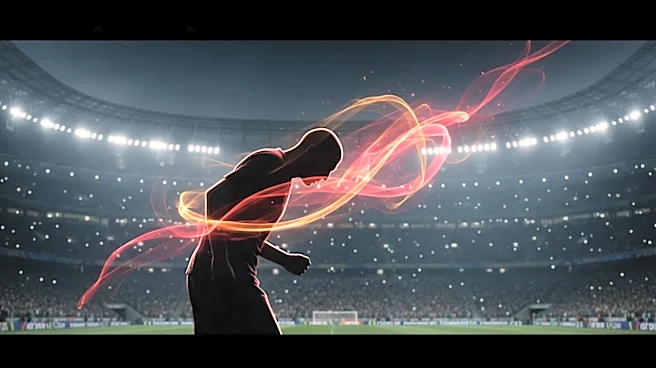
What happened next is the image seared into the memory of a generation. As the Brazilian players erupted in joyous celebration, Baggio stood motionless at the penalty spot. He bent over slightly, hands on his hips, head bowed. He became, in that instant, the man who died standing. The noise of 94,000 fans and the victorious Brazilians faded into a personal, silent agony. His slow walk back toward the center circle, a solitary figure in a sea of his opponents' ecstasy, was more powerful than any celebration. It was a universal portrait of failure on the grandest stage, a hero left alone with the weight of his nation's broken dreams.
A Legacy Forged in Failure
Baggio has since spoken of the moment, calling it a "wound that never closes." He’s admitted that the miss haunted him for years. And yet, to define his magnificent career by this one failure is a profound injustice. He was a player of sublime skill and courage, who played through career-threatening injuries to become one of the game's all-time greats. In a way, the miss and his quiet dignity in its aftermath only added to his myth. It made him human. In a sport that deifies its winners, Roberto Baggio became beloved for his most famous loss. We remember the walk back not just for the pain, but because in that moment of crushing defeat, we saw a reflection of our own fragility. And in his courage to take the kick, we saw the hero he truly was.