




Crafting a Story from Chaos
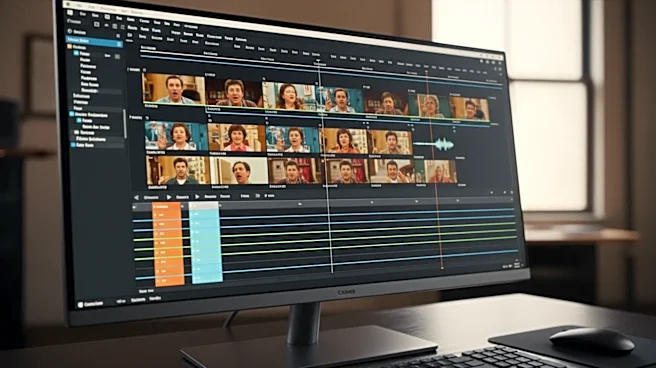
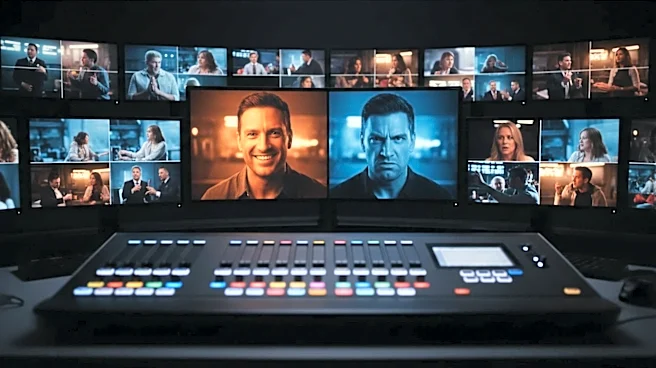
Before you imagine producers in a dark room cackling as they plot a contestant's demise, understand this: a reality show's first job is to tell a story. With hundreds of hours of footage for a single one-hour episode, editors are tasked with finding a coherent
narrative in the chaos. If they simply showed events as they happened, it would often be boring and nonsensical. The goal is to create a compelling arc, which requires making choices about what to show and what to cut. This fundamental need to build a story is where the line between documenting reality and shaping it begins to blur.
The Birth of Heroes and Villains
Every good story needs protagonists and antagonists. In reality TV, these roles are assigned in the edit bay. A contestant might be a complex person, but the edit will simplify them into a type. Did someone make a mildly selfish comment? By repeatedly showing that clip, pairing it with unflattering reaction shots from others, and underscoring it with sinister music, editors can build a villain. Conversely, a contestant who gets a heroic musical score and is consistently shown in a positive, empathetic light becomes the hero the audience roots for. This selective portrayal has real-world consequences, as contestants often deal with public perception shaped entirely by an edit they couldn't control.
The 'Frankenbite': Dialogue from the Upside Down
One of the most powerful and deceptive tools is the "frankenbite." This is where editors splice together words and phrases from completely different conversations to create a new, often more dramatic, sentence that was never actually spoken. You might see a contestant appear to confess something shocking, but the audio is a clever composite of unrelated soundbites. It’s a way to create a specific plot point or fuel a conflict that may not have existed. Producers can also use leading questions in confessional interviews to get the exact soundbite they need to complete their manufactured sentence. It's a highly effective technique that directly manipulates the narrative.
Time, Space, and Reaction Shots
Editing also plays fast and loose with chronology. An argument on day three and a tearful confession on day ten can be cut together to look like a direct cause and effect. This reordering of events creates a false but more dramatic timeline for the viewer. The most common tool for this is the reaction shot. Is a contestant giving a boring speech? An editor can cut to another contestant rolling their eyes. That eye-roll might have been a reaction to a fly buzzing in the room hours earlier, but in the context of the speech, it creates instant conflict. The audience is constantly being guided by these carefully selected, and often out-of-context, emotional cues.
The Unseen Hand of Production
Beyond the edit bay, producers on set can nudge the action in a desired direction. While outcomes of challenges are generally fair, the social dynamics are fair game. Former contestants and producers have admitted that production often encourages certain actions or conversations, knowing they will lead to tension. If a producer sees a conflict brewing, they might suggest two rivals have a "chat," ensuring cameras are there to capture the fireworks. On shows like "The Bachelor," producers have been known to persuade the lead to keep a "villain" around for a few more episodes simply because they make for good television.