







A Dynasty Built on Beads
The story begins in 1924, when Albert and Marie-Louise Lesage acquired the esteemed Michonet embroidery workshop, an atelier that had supplied the very first haute couture designer, Charles Frederick Worth. Albert, a former designer for Marshall Field's
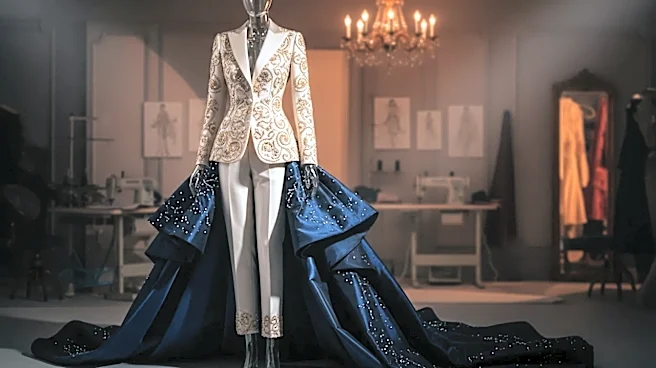
in Chicago, and Marie-Louise, an embroidery expert from the house of Vionnet, combined their talents to push the craft into the modern era. They forged critical relationships with the avant-garde designers of the time, most notably Elsa Schiaparelli. Their collaboration resulted in some of fashion's most iconic surrealist works, including jackets embroidered with astrological signs and circus themes, cementing Lesage's reputation for creativity and technical brilliance.
The Charismatic Heir
In 1949, the mantle passed to their 20-year-old son, François Lesage, who would become a legend in his own right. After a brief stint setting up a studio in Hollywood to embroider for film stars like Marlene Dietrich, he returned to Paris to lead the family business. Charismatic and wildly imaginative, François cultivated deep, personal relationships with designers. He became the go-to embroiderer for a new generation of couturiers, including Christian Dior, Hubert de Givenchy, and, most enduringly, Yves Saint Laurent. Their 44-year collaboration produced masterpieces like the 'Irises' and 'Sunflowers' jackets, which painstakingly recreated Van Gogh's paintings with hundreds of thousands of sequins and beads, requiring over 600 hours of work each.
An Archive of Dreams
Perhaps François Lesage's greatest legacy, beyond any single garment, is the house's archive. It is the world's largest collection of couture embroidery, containing over 75,000 samples that trace the history of fashion from the 19th century to today. More than a museum, this living library is a vital source of inspiration for designers like Karl Lagerfeld and John Galliano, who have consulted its treasures to spark ideas for new collections. Each swatch represents a moment of creative possibility, a solution to a design challenge, and collectively, they are estimated to represent millions of hours of meticulous handwork by the artisans known as "petites mains" (little hands).
The Art of the Lunéville Hook
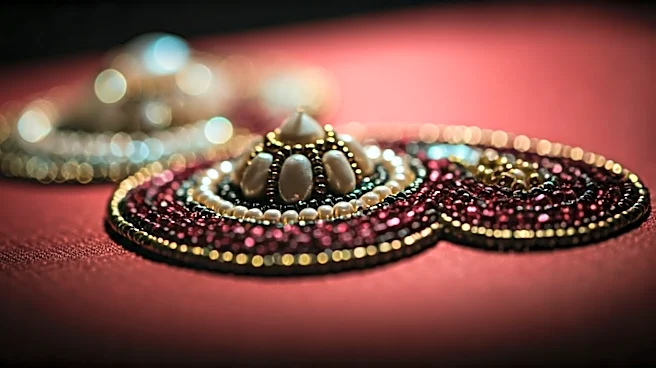
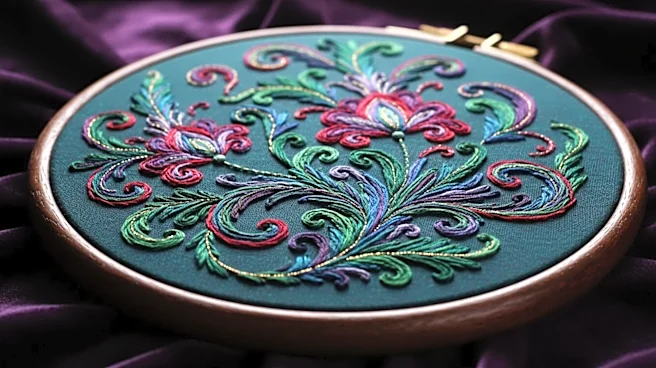
The magic of Lesage is not just in the design but in the execution. The house is a master of the Lunéville or tambour embroidery technique, which uses a special hooked needle to create a chain stitch. Working from the reverse side of fabric stretched taut on a frame, artisans hook threads pre-strung with beads and sequins, applying them with a speed and precision that needle embroidery cannot match. This method allows for the creation of dense, intricate surfaces that shimmer and move, transforming simple cloth into something otherworldly. It's a skill that takes years to master and is passed down through the École Lesage, the school François founded in 1992 to preserve the craft.
Securing the Future with Chanel
By the end of the 20th century, many of Paris's specialized artisan workshops faced an uncertain future. Recognizing the danger of losing this priceless savoir-faire, Chanel, under the direction of Karl Lagerfeld, began acquiring these ateliers. In 2002, Lesage joined Chanel's Paraffection subsidiary, a move that secured its financial stability while allowing it to continue working with other couture houses. This ensured that the fantasy factory would not only survive but thrive. Today, as part of Chanel's Métiers d'Art, Lesage continues to be a vital creative partner, weaving intricate tweeds and embellishing the brand's most spectacular runway creations, proving that even in a world of fast fashion, the demand for dreams, stitched one bead at a time, is eternal.