






The Simple Allure of the Clock
There’s a reason we love time of possession. In sports like football, soccer, and hockey, the idea is simple: if you have the ball (or puck), the other team can’t score. It feels like a direct measure of control, a proxy for which team is imposing its
will on the other. A team that holds the ball for 40 out of 60 minutes in football, or boasts 70% possession in a soccer match, seems destined to win. This number is easy to grasp, presented clearly on screen, and it builds a simple narrative of dominance that is satisfying for fans and commentators alike.
When Dominance Doesn't Deliver
The problem is, that narrative often crumbles by the final whistle. A team can win the possession battle and lose the game, sometimes badly. Think of a soccer team passing the ball harmlessly among its defenders, never threatening the goal. Or a football team grinding out three-yard runs that chew up the clock but ultimately end in a punt. This is often called “sterile possession” or “empty calories.” You’re holding the ball, but you aren’t doing anything dangerous with it. Conversely, a quick-strike offense might score in seconds, ceding possession time but winning on the scoreboard. Raw possession doesn’t distinguish between a team methodically marching down the field and one stuck in its own half. It only measures time, not intent or effectiveness.
Adjusting for What Matters: Pace and Quality
This is where possession-adjusted stats come in. Instead of asking “how long did you have the ball?” they ask, “what did you do every time you had it?” This is a fundamental shift from measuring volume to measuring efficiency. The two key concepts are pace and quality.
Pace adjustment normalizes stats to a common baseline, like “per 100 possessions.” This lets you compare a fast-breaking basketball team with a slow, deliberate one on equal footing. Team A might score 110 points in a 105-possession game (1.05 points per possession), while Team B scores 100 points in a 90-possession game (1.11 PPP). Team B has the more effective offense, even though they scored less.
Quality adjustment looks at the value of each action. The best example is soccer’s Expected Goals (xG), which assigns a probability to every shot based on its location, angle, and other factors. A tap-in from the six-yard box might have an xG of 0.8 (an 80% chance of scoring), while a 40-yard screamer might be 0.02 (a 2% chance). This helps us see if a team is creating great chances or just taking a lot of bad shots.
A New Language Across Sports
This thinking has transformed how we analyze every major sport.
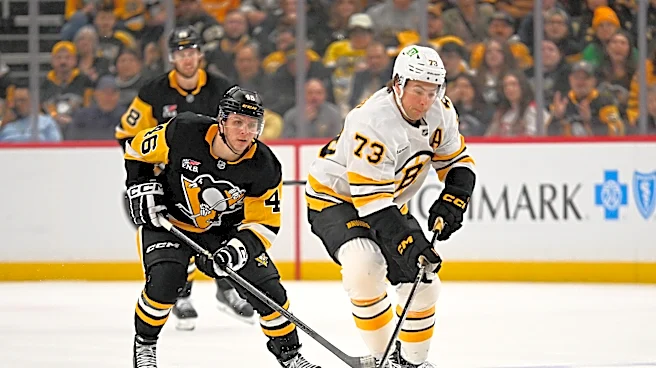
In hockey, since tracking the puck itself is difficult, analysts use shot attempts as a proxy for possession. Stats like Corsi (all shot attempts) and Fenwick (unblocked shot attempts) measure the shot differential while a player is on the ice. A player with a high Corsi For percentage (CF%) is on the ice for more shot attempts by his team than the opponent, indicating his team controls the puck and generates chances when he's playing.
In basketball, the Player Efficiency Rating (PER) was an early attempt to boil down a player’s all-around contribution into a single, pace-adjusted number. More common now are stats like points, rebounds, and assists “per 100 possessions,” which strips out the distorting effect of a team’s playing speed.
In football and soccer, possession-adjusted defensive stats are crucial. A defender on a team that has the ball 70% of the time has fewer opportunities to make tackles and interceptions. Adjusting these numbers for how much their opponent has the ball reveals who is truly making defensive plays at the highest rate.
Reading the Game, Not Just the Clock
Understanding this concept changes how you watch a game. You start to see beyond the raw numbers on the scoreboard or the possession clock. You can spot the team that is losing the possession battle but winning the war for high-quality chances. You can identify the efficient player whose contributions are masked by his team’s slow pace, or the defender whose low tackle count is a product of his team’s dominance, not his own laziness.
It’s not about discarding time of possession entirely; it can still offer context, especially in a sport like football where wearing down a defense is a valid strategy. But it should be the beginning of the conversation, not the end. The real story isn't who held the ball the longest, but who did the most with the opportunities they had.