







Music of the Heart (1999)
Let's start with the most jarring entry: a heartfelt drama starring Meryl Streep that earned her an Oscar nomination. Yes, the director behind 'The Last House on the Left' also made this touching biographical film about a teacher who fought to bring violin
lessons to underprivileged kids in East Harlem. Released between 'Scream 2' and 'Scream 3', 'Music of the Heart' was Craven's one and only feature film outside the horror and thriller genres. He took on the project, based on the documentary 'Small Wonders', to prove he could do more than just scare audiences. The result is a sincere, uplifting, and competently made movie that feels a million miles away from Elm Street. It's the ultimate Wes Craven trivia night answer and a genuine testament to his desire to be seen as a versatile artist, not just a 'Master of Horror'.
Red Eye (2005)
While not a total departure from suspense, 'Red Eye' is a different beast entirely from Craven's horror fare. This is a lean, mean, Hitchcockian thriller that runs a taught 85 minutes. The plot is simple: a hotel manager (Rachel McAdams) on a red-eye flight finds herself seated next to a charming man (Cillian Murphy) who reveals himself to be a terrorist operative. He needs her to make a call to facilitate an assassination, and he uses her father's life as leverage. Confined almost entirely to two airplane seats, the film is a masterclass in building tension through dialogue and claustrophobia, not jump scares. 'Red Eye' is a pure psychological thriller, a cat-and-mouse game at 30,000 feet that showcases Craven's directorial precision in a way his more chaotic horror films often couldn't. It’s a nail-biter that surprises by showing how much dread Craven could create without a drop of the supernatural.
The Serpent and the Rainbow (1988)
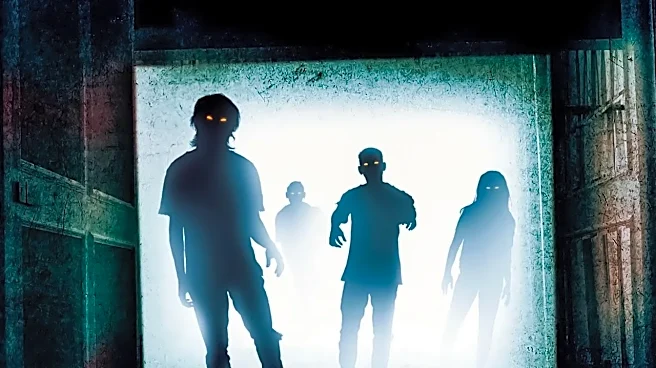
If you only know Craven for slashers, 'The Serpent and the Rainbow' will feel like a revelation. Based loosely on a non-fiction book by an ethnobotanist, the film follows an American anthropologist (Bill Pullman) who travels to Haiti to investigate a 'zombie powder' used in voodoo rituals. This is not a George A. Romero zombie flick. Instead, Craven crafts an atmospheric and political horror film steeped in the real-world folklore and turmoil of Haiti. It explores taphophobia (the fear of being buried alive) and uses zombification as a metaphor for political oppression. It was a significant step for Craven, allowing him a larger budget and an international location to create a film that was more of an intoxicating, tortured adventure than a straightforward horror movie. It's a challenging, serious, and often surreal work that proved his thematic ambitions went far beyond suburbia.
Shocker (1989)
After creating the pop-culture icon Freddy Krueger, Craven was famously shortchanged on the franchise's profits. 'Shocker' was his attempt to create a new, wholly-owned horror villain. The film follows Horace Pinker (a maniacal Mitch Pileggi), a serial killer who, after being executed in the electric chair, becomes pure energy, able to possess bodies and travel through television signals. The movie is a bizarre, messy, and wildly entertaining experiment. It has an inconsistent tone, bouncing between gruesome slasher, heartfelt drama, and goofy comedy. The finale, a chase sequence through different TV channels, is a surreal and ambitious piece of meta-commentary that predates his work on 'Scream'. While it failed to launch a new franchise and is often seen as a misfire, 'Shocker' is a fascinating look at Craven throwing everything at the wall. It’s surprising for its wild creative swings and its aggressive, almost desperate energy to top what came before.