




The Master Technician
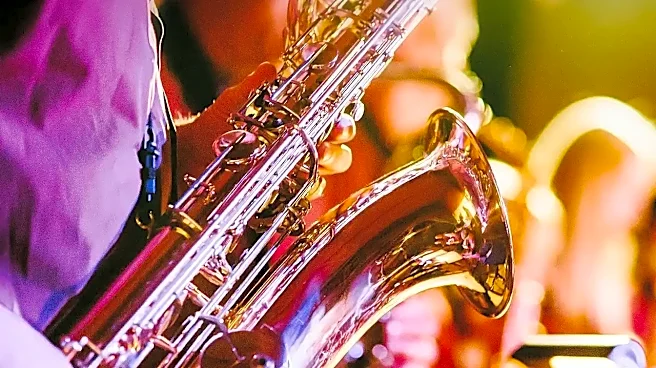
To understand Jimmy Dorsey’s unique sound is to understand his near-superhuman command of his instruments. A multi-instrumentalist who started on trumpet before mastering the clarinet and alto saxophone, Dorsey possessed a technical facility that left
other musicians in awe. He was a master of techniques like triple-tonguing, allowing for breathtakingly fast and precise runs that sounded almost physically impossible. Fellow saxophonists, including the legendary Lester Young and Charlie Parker, cited him as a major influence. This wasn't just flash for its own sake. His solos, even at their most complex, were always melodic and full of emotion. His clarinet playing was also distinct; he often used an Albert system fingering, which was different from the Boehm system used by contemporaries like Benny Goodman, giving his tone a slightly different color and texture. This combination of raw technical skill and deep musicality made him a virtuoso whose playing was instantly recognizable.
The Architect of an Orchestra
While his personal playing was a cornerstone, Dorsey's genius extended to his role as a bandleader. After splitting with his famously volatile brother Tommy in 1935 following an on-stage argument over a song's tempo, Jimmy took over the Dorsey Brothers Orchestra and began shaping it to his own vision. Initially more jazz-oriented than Tommy's subsequent band, Jimmy's orchestra evolved into a hit-making machine. A key innovation came with his arrangers, particularly Tutti Camarata, who helped craft a series of Latin-tinged mega-hits in the early 1940s. Songs like "Amapola," "Green Eyes," and "The Breeze and I" combined Dorsey's smooth saxophone with infectious Latin rhythms, creating a fresh and wildly popular sound. This willingness to blend styles and always update his band's sound kept him at the top of the charts for years.
A Formula for Hits
Beyond the Latin rhythms, Dorsey’s band perfected a unique and wildly successful song structure for its vocal hits. This format, reportedly developed at the request of a record producer, was a three-part showcase designed for a three-minute 78 rpm record. It would typically start with vocalist Bob Eberly singing a slow, romantic ballad for the first minute. Then, the tempo would pick up for the second minute as the full band launched into an instrumental break, prominently featuring Jimmy's virtuosic saxophone. Finally, vocalist Helen O'Connell would take over for a sassy, up-tempo final minute, sometimes singing in Spanish. This Eberly-O'Connell duet format, with its charming "boy and girl next door" appeal, was a sensation. It allowed the band to showcase all its strengths—balladry, hot jazz, and vocal charm—in a single, perfectly packaged hit. This structure became a signature of the orchestra and propelled them to massive commercial success throughout the early '40s.
A Legacy of Influence
While other bandleaders might have had a more singular, identifiable style, Jimmy Dorsey's uniqueness came from his fusion of unparalleled technical skill, smart arranging, and commercial savvy. He was a musician who could dazzle the most serious jazz aficionados while simultaneously producing pop hits that the whole country could sing along to. Even as the big band era waned, Dorsey adapted, scoring a final, massive rock-and-roll-influenced hit with "So Rare" in 1957, shortly before his death. The song became the highest-charting hit by a big band leader in the first decade of rock, a testament to his enduring ability to connect with an audience. Though sometimes overshadowed by his brother or other swing-era giants, Jimmy Dorsey's intricate, polished, and powerful sound remains a high-water mark in American music—a style so distinctly his that it truly was one of a kind.