









The Texas Titan: AT&T Stadium
The venue at the heart of this acoustic intrigue is AT&T Stadium in Arlington, Texas. Known as 'Dallas Stadium' for the tournament, it’s not just any host; it’s the busiest venue of the entire 2026 World Cup. It's slated to stage a staggering nine matches,
more than any other location. The schedule includes five group stage games, two crucial Round of 32 knockout matches, a Round of 16 clash, and, most importantly, one of the two coveted semi-final matches on July 14. A team’s journey to the World Cup final will run directly through this Texas behemoth, where the opponent isn’t just the team on the other side of the ball, but potentially the very air around them.
An Amplifier Disguised as a Stadium
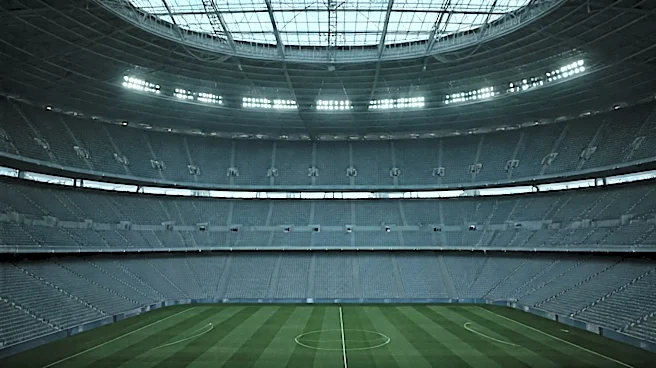
So what makes this place so special? In a word: enclosure. Unlike famous open-air cauldrons of noise, AT&T Stadium is an engineering marvel designed to contain energy. It boasts a colossal retractable roof supported by two sweeping, 1,225-foot steel arches. When that roof is closed for a soccer match, the entire three-million-square-foot facility becomes a sealed drum. The stadium’s design features enormous glass walls and a playing surface situated 50 feet below street level, creating a deep bowl that traps sound with stunning efficiency. Every cheer, every chant, every collective gasp has nowhere to go but reverberate, bounce off the angled surfaces and the translucent roof fabric, and cascade back down onto the field. It wasn't built to be a quiet place; it was designed for an immersive, and loud, NFL gameday experience, a legacy that World Cup teams are about to inherit.
When Sound Becomes a Weapon
For players, this wall of sound is more than a simple distraction; it’s a tactical variable. Studies on athletic performance show that extreme crowd noise directly impacts players in high-pressure situations. It disrupts on-field communication, making it nearly impossible for defenders to organize or for a midfielder to hear a teammate’s call for a pass. More critically, research has demonstrated that accuracy in precision tasks, like a game-deciding penalty kick, significantly decreases under the cognitive load of negative or chaotic noise. It’s not just in the players' heads. The 'home advantage' effect is real, with studies confirming that referees are subconsciously influenced by a roaring crowd, sometimes becoming more hesitant to make calls against the favored team. In a place engineered to amplify every decibel, these effects could be magnified to an unprecedented degree.
The Semi-Final Cauldron
This brings us back to the semi-final. Imagine two of the world’s best teams, having survived a grueling month-long tournament, playing for a spot in the World Cup final. The stakes are absolute. The margins are razor-thin. Now, place that contest inside this coliseum of sound. A defender misses a crucial instruction from his goalkeeper. A striker, unnerved by the deafening roar, pulls a penalty kick inches wide. A referee, swayed by the sheer force of 80,000 voices, hesitates on a foul call in the box. In a game often decided by inches and seconds, the unique and overwhelming acoustic environment of AT&T Stadium introduces an element of pure chaos. It's the ultimate wild card in a tournament that leaves no room for error.