


The 'Turniermannschaft' Mindset
There’s a word in German that explains it all: *Turniermannschaft*. It translates to “tournament team.” It’s the idea that a squad can look disjointed and uninspired for two years in friendlies and qualifiers, only to transform into a ruthless, efficient
unit the second a major tournament kicks off. This isn't just a fan theory; it's a core part of their national soccer identity. While other teams might crack under the unique, concentrated pressure of knockout football, German teams are forged in it. They thrive on the clarity of do-or-die scenarios. Their training and psychological preparation are geared towards peaking over a four-week period, not maintaining form over a two-year cycle. It’s a mentality that prizes resilience, problem-solving, and an almost unnerving calm when the stakes are highest. This is why a group-stage draw or even a loss doesn't send them into a panic; it's often just part of the process of finding their tournament rhythm.
An Endless Factory of Talent
A nation's soccer reputation can't survive on mentality alone. Germany’s enduring strength is built on one of the world's most sophisticated and productive youth development systems. Following a disastrous Euro 2000 campaign, the German Football Association (DFB) mandated that every club in the top two divisions operate a youth academy, leading to a nationwide talent pipeline. The result? A seemingly bottomless well of technically gifted, tactically intelligent players. When one golden generation, like the 2014 World Cup winners (Schweinsteiger, Lahm, Klose), ages out, another is already breaking through. Today, you see it with players like Jamal Musiala and Florian Wirtz—creative, dynamic attackers who represent the next evolution. This depth means they can absorb injuries and dips in form. If one star player is struggling, there's often another of near-equal quality ready to step in, ensuring the machine keeps running.
Pragmatism Over Dogma
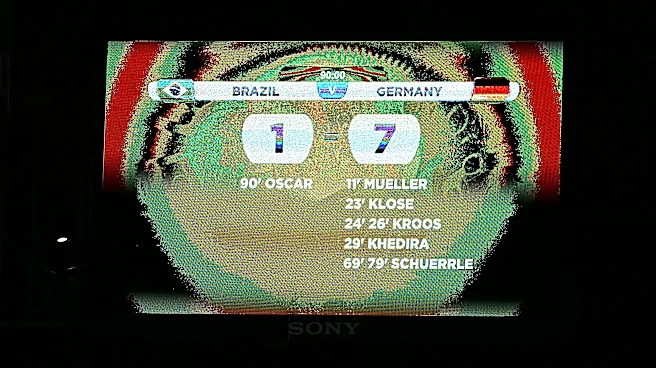
Unlike nations famous for a single, unyielding philosophy—like Spain’s tiki-taka or the Dutch “Total Football”—Germany’s greatest tactical strength is its pragmatism. They adapt to win. The 2014 World Cup-winning side could dominate possession, but they could also cede the ball and hit teams with devastating counter-attacks, as they famously did in their 7-1 demolition of Brazil. German coaches, from Joachim Löw to Julian Nagelsmann, are students of the game, willing to shift formations and strategies based on the opponent. They can play a high-pressing, energetic style or sit in a disciplined, compact block. This chameleon-like ability makes them incredibly difficult for opponents to scout and prepare for. You might know the players, but you can never be certain how they’ll choose to attack you, giving them a critical strategic advantage in the chess match of a knockout game.
The Weight and Power of History
Four World Cups and three European Championships. That history isn’t just a collection of trophies in a museum; it’s a palpable presence. Every player who wears the white and black jersey is aware of the standard they are expected to uphold. This creates immense pressure, but it also instills a profound sense of belief. They’ve seen it done before, and they know it can be done again. For opponents, facing Germany isn't just about playing the 11 men on the field; it’s about playing against the ghosts of Beckenbauer, Müller, and Matthäus. It’s an aura of invincibility that can create doubt in the minds of even the most confident rivals. And while the shocking group stage exits in the 2018 and 2022 World Cups have certainly tarnished that aura, they also serve as fuel. A wounded Germany is often a more dangerous Germany, driven by a collective desire to restore its honor on the world stage.