


The Physics of Believable Danger
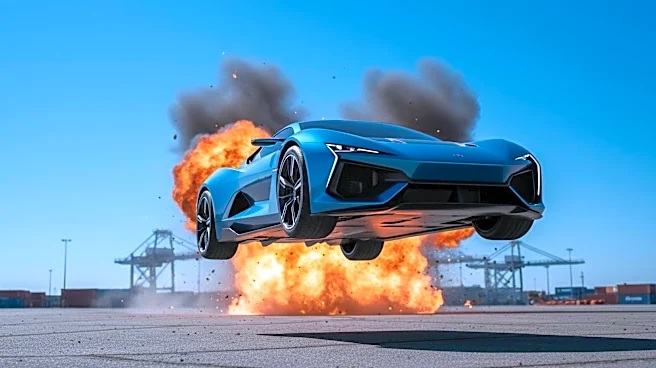
Our brains are hardwired to understand the real world. We have an innate sense of gravity, momentum, and consequence. When a movie shows us something that respects those laws, the effect is immediate and visceral. A real car chase, with actual vehicles
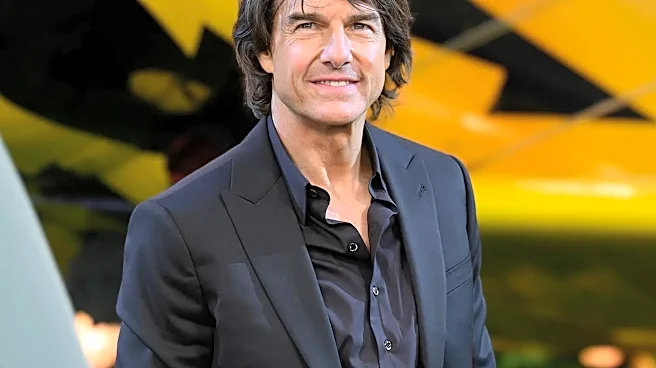
narrowly avoiding collisions, communicates a tangible sense of risk that a purely digital creation often struggles to replicate. This is the Tom Cruise effect in action. When he hangs from the side of a real Airbus A400M as it takes off in Mission: Impossible – Rogue Nation, we aren’t just watching Ethan Hunt; we’re watching an actor subject himself to genuine, terrifying forces. The audience reaction is heightened because we understand the stakes are not just narrative, but physical. This authenticity triggers a more profound emotional engagement, making us hold our breath in ways a weightless, physics-defying digital double rarely can.
An Appreciation for Human Craft
Cheering for a practical stunt is also cheering for the incredible human effort behind it. We are celebrating the skill of the stunt performers, the ingenuity of the choreographers, and the audacity of the filmmakers. Knowing that the jaw-dropping polecat sequence in Mad Max: Fury Road involved stunt performers trained by Cirque du Soleil, swinging from real vehicles at high speeds, transforms the spectacle into a showcase of artistry. It feels like watching an Olympic-level performance. In contrast, even the most brilliant CGI can sometimes feel impersonal. While it requires immense artistic and technical skill, the process is less transparent to the audience. This can create a subtle disconnect; viewers are more aware than ever of what looks artificial, leading to a kind of visual fatigue when digital effects are overused.
The Uncanny Valley of Action
Computer-generated imagery has revolutionized filmmaking, but it can also fall into an “uncanny valley” of action. When digital characters or objects move without the constraints of real-world weight and physics, they can appear floaty or unnaturally smooth, breaking the audience's immersion. This is especially true in close-up fight scenes or complex physical interactions where our eyes are experts at detecting what feels “off.” A stunt performer taking a real, bone-crunching tumble down a flight of stairs, like in John Wick: Chapter 4, has a brutal authenticity that resonates because it looks painful and real. Practical effects also give actors something tangible to react to, grounding their performances. An actor performing against a green screen must imagine their environment, whereas an actor in a real, exploding set delivers a more genuine reaction.
The Rise of the Hybrid Approach
The debate isn't strictly about choosing one over the other. The most effective modern blockbusters employ a hybrid approach, using CGI to enhance practical stunts rather than replace them entirely. Digital tools can seamlessly remove safety wires, add debris, or composite different real elements to create a perfect shot. For example, the aerial combat in Top Gun: Maverick felt so intense because it placed actors in real fighter jets, capturing the genuine G-forces on their faces, something impossible to fake. Similarly, a director like Christopher Nolan might crash a real Boeing 747 for Tenet because it provides an unparalleled sense of scale and destruction that CGI struggles to match. This blend allows for maximum spectacle without sacrificing the grounded, tactile reality that makes audiences lean in and, when the moment lands, cheer with everything they’ve got.