



The Man of Eight Faces
Hollywood builds its stars on recognizable personas, but Alec Guinness built his career on disappearing. The ultimate proof came in 1949 with the British dark comedy “Kind Hearts and Coronets.” In a move that was less a casting choice and more a theatrical
dare, Guinness played eight different characters—all members of the aristocratic D'Ascoyne family, standing between a vengeful heir and a dukedom. He portrayed a doddering parson, a pompous general, a crusty admiral, and even the formidable Lady Agatha. This wasn't a gimmick of heavy prosthetics; it was a masterclass in subtle transformation, altering posture, voice, and bearing for each role. For an industry that sold stars as consistent products, Guinness’s desire to be a blank slate, a true chameleon, was a stunning and slightly unnerving declaration of artistic independence.
The Unheroic Hero
Winning an Oscar for Best Actor should be the least stunning part of a role, but with Guinness, nothing was simple. For “The Bridge on the River Kwai” (1957), director David Lean was initially unconvinced the comedic actor could handle the dramatic weight of Colonel Nicholson. Guinness, for his part, initially dismissed the script. Once on set, he clashed intensely with Lean, arguing that his character was a 'blinkered' and deeply flawed man, not a simple hero. He actively rewrote parts to make Nicholson more rigid and obsessive, a man whose integrity was a form of madness. This insistence on portraying a difficult, unlikable protagonist in a blockbuster war film baffled the filmmakers. Yet, it was precisely this commitment to complexity that transformed the character into one of cinema’s most unforgettable figures and earned Guinness his Academy Award.
Crossing Controversial Lines
Not all of Guinness's transformations were met with universal acclaim. His 1948 portrayal of Fagin in David Lean’s “Oliver Twist” remains one of his most controversial roles. Using makeup that exaggerated stereotypical Jewish features, the performance was seen as so antisemitic that the film’s U.S. release was delayed for three years and required significant cuts. Years later, in 1961's “A Majority of One,” he again crossed a boundary by playing Koichi Asano, a Japanese businessman. While Guinness reportedly traveled to Japan to study the culture, his performance, aided by heavy makeup, was jarring to some even then. Co-star George Takei later called the portrayal “disastrous.” In an era of less sensitivity, these were bold artistic swings, but they highlight a willingness to tackle roles that, by modern standards, stun for entirely different reasons.
The Jedi Who Hated 'Mumbo Jumbo'
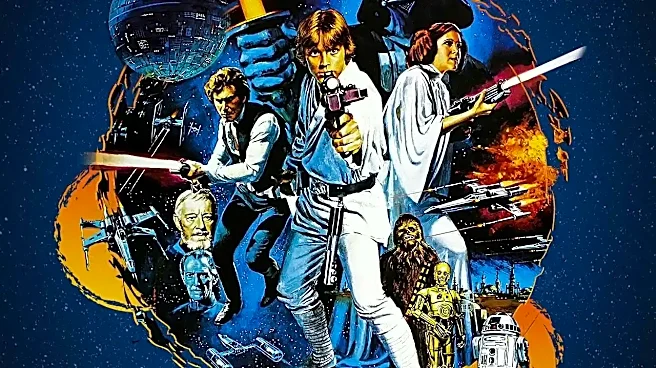
The choice that brought him global immortality was one he almost didn't make. A respected Shakespearean actor, Guinness initially dismissed “Star Wars” as “fairy-tale rubbish.” He was openly critical of the “rubbish dialogue” and “lamentable” lines, complaining in letters about the “mumbo jumbo” he had to speak. So why take the part of Obi-Wan Kenobi? They met his price, and he saw a flicker of moral good in the story. But the truly stunning move came after. Having shrewdly negotiated for 2% of the film’s gross profits—a deal that made him incredibly wealthy—he spent the rest of his life famously ambivalent, if not outright dismissive, of the role that defined him for millions. He found the fandom tiresome and was known to throw away fan mail unopened, cementing his reputation as the reluctant icon who never quite made peace with the Force.