



The Myth: Applause as a Verdict
You see the news alerts every year: Francis Ford Coppola’s “Megalopolis” receives a seven-minute ovation. Demi Moore’s body-horror film “The Substance” earns a nine-minute roar of approval. The public’s natural takeaway is that these must be instant classics, films so transcendent they moved a discerning audience to its feet for the length of a pop song. In our minds, the stopwatch becomes a proxy for quality—a five-minute clap is good, seven is great, and anything over ten is a future Best Picture winner. This perception is fueled by breathless reporting that frames the ovation as the first, crucial verdict on a film's merit. But inside that gilded theater on the French Riviera, the applause means something entirely different.
The Reality: A Ritual of Respect and Relief
The first thing
to understand is that a premiere at the Palais des Festivals is not a neutral screening. The director, cast, and key crew members are present, sitting in the audience, often seeing the finished product with a crowd for the first time. The ovation that follows the credits is, first and foremost, a gesture of respect. It’s an acknowledgment of the years of labor, the artistic risk, and the personal investment required to make a movie. No one wants to be the person who delivers an immediate, silent rebuke to a teary-eyed director standing just a few rows away. It’s also often an expression of relief. For a film with a troubled production or sky-high expectations, a solid, sustained applause can simply mean, “Well, that wasn’t a disaster.” It’s a collective exhale translated into clapping.
The Audience: Who Is Actually Clapping?
A Cannes premiere audience is not your typical Friday night crowd at the local multiplex. It’s a curated, insider-heavy group with complex motivations. A significant portion of the seats are filled by the film's own team: producers, financiers, distributors, and their invited guests. They have a vested personal, professional, or financial interest in the film’s success. Of course they’re going to clap. Another chunk is composed of festival programmers and industry delegates who maintain relationships with the filmmakers. Then you have the critics, who may or may not be joining in. This ecosystem creates a polite echo chamber. The applause is initiated by those closest to the film, and social pressure—plus the sheer formality of the black-tie event—compels others to join in.
The Camera Factor: Performing for the Media
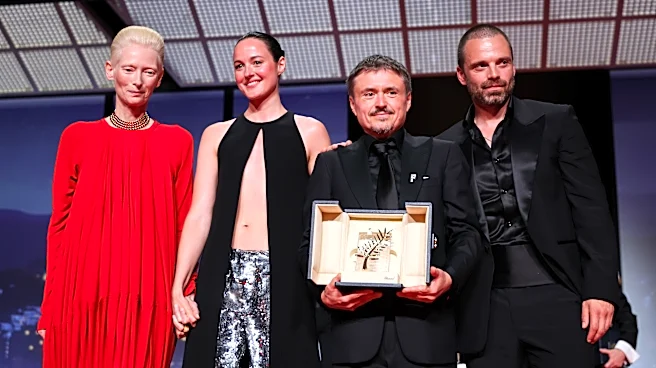
The standing ovation is, above all, a performance for the cameras. As soon as the credits roll, the spotlight swings to the director and stars. Their emotional reactions—the tears, the hugs, the looks of disbelief—are captured in close-up and beamed around the world. The ovation is the backdrop to this manufactured media moment. The longer it goes, the more dramatic the footage, and the better the story for the next day's headlines. It’s a self-perpetuating cycle: the media reports on the length of the ovation, which incentivizes audiences to keep it going to create a bigger moment. It has become an obligatory piece of festival pageantry, as much a part of the Cannes brand as the red carpet itself.
The Real Signal: Listen for the Boos
If a long ovation is a fuzzy and unreliable signal, what’s the real indicator of a film’s reception at Cannes? The negative reactions. While politeness often dictates applause, genuine dissatisfaction is much harder to fake. Scattered boos during the credits are a devastatingly clear sign that a film has alienated a portion of the audience. Even more telling are the walkouts. When critics and buyers start streaming for the exits mid-film, it’s an unambiguous verdict that the movie isn't working. Infamous films like Vincent Gallo’s “The Brown Bunny” were met with jeers and walkouts, a far more honest reaction than a polite, seven-minute clap. The silence or, worse, the audible disapproval is the sound that truly echoes through the industry.