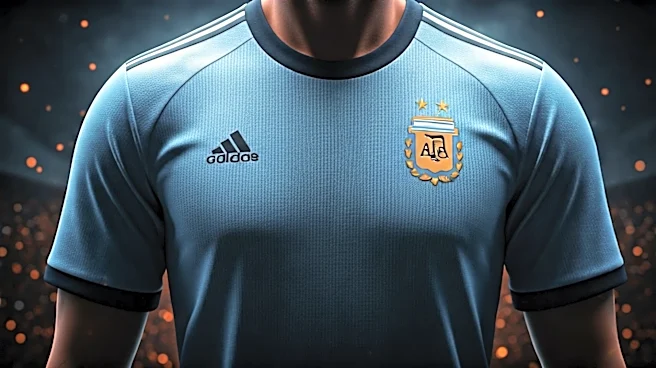









The Ghost of Maradona
You can't understand Argentina without understanding Diego Maradona. Long before Messi, Maradona was the team’s tortured genius and patron saint. In the 1986 World Cup quarter-final against England, just four years after the Falklands War, he delivered
a performance that perfectly encapsulates the Argentine football soul. First, he scored the infamous “Hand of God” goal, a blatant handball he cheekily attributed to divine intervention. It was cunning, unfair, and celebrated. Minutes later, he scored the “Goal of the Century,” an impossibly brilliant solo run through half the English team. In that single game, he was both a cheat and a god, a rogue and a genius. That duality—brilliance mixed with a street-smart, win-at-all-costs mentality—is baked into the national team’s DNA. Every player who wears the shirt plays in the shadow of his beautiful, chaotic legacy.
The Burden and Redemption of Messi
For years, Lionel Messi’s story with Argentina wasn't one of triumph, but of agonizing failure. He was the world's greatest player, but for his country, he was the man who kept falling short. The crushing loss to Germany in the 2014 World Cup final, followed by back-to-back Copa América final defeats, created a national psychodrama. Was he truly Argentine? Did he care enough? The pressure was immense, the criticism brutal. Unlike the brash Maradona, Messi is a quiet, unassuming leader. His journey became a national obsession. That’s why the 2022 victory was more than just a win; it was a collective catharsis. It was a nation watching its quiet son finally fulfill his destiny, validating a generation of hope and silencing two decades of doubt. His tears of joy were the country's tears of joy.
The 'Hinchada' — More Than Just Fans
American sports have passionate fans. Argentina has 'la hinchada'—a force of nature. They are not spectators; they are active participants, the mythical “12th player.” An Argentine stadium is a pulsating, nonstop carnival of noise, smoke, and song. The fans, known as 'hinchas', have a catalog of chants that are more like hymns, telling stories of glory, heartbreak, and identity. The anthem of the 2022 World Cup, a song called “Muchachos,” wasn't a corporate jingle; it was a fan-made chant that swept the nation and was sung by the players themselves. It tells the story of past finals lost, mentions Maradona and Messi, and dreams of a new victory. For Argentines, supporting the team is a deeply emotional, communal, and almost religious experience. When you watch them play in 2026, listen for the crowd. They are a central part of the performance.
A Nation's Identity on the Pitch
In a country often defined by economic instability and political turmoil, the national soccer team is one of the few things that truly unites everyone. It’s a source of uncomplicated pride and a projection of how Argentines see themselves: passionate, resilient, creative, and capable of producing moments of pure genius against the odds. A World Cup campaign isn’t just a sporting event; it's a 30-day freeze on normal life. The country grinds to a halt. Streets are deserted during games, only to explode in city-wide celebrations after a win. This is not just an escape; it’s an affirmation of national identity. The team’s success provides a global stage to showcase the best of Argentina, a story of artistry and heart that transcends politics and economics.