






A Revolution in a Bottle
In 1920, Gabrielle “Coco” Chanel was already a titan of fashion, but she wanted to create a signature scent unlike any other. She challenged perfumer Ernest Beaux with a revolutionary brief: create a perfume that “smells like a woman, not a rose.” At
the time, respectable women wore simple, single-note floral scents. More complex perfumes with animalic notes of musk were associated with courtesans. Chanel wanted to invent a third way. Beaux, who had been inspired by the crisp, icy air of the Arctic Circle during his time in Russia, presented her with a series of samples. His innovation was a daringly high dose of aldehydes, a group of synthetic compounds that gave the fragrance an abstract, effervescent quality, often described as smelling like clean linen or a hot iron. Legend has it that the massive quantity of aldehydes in sample number five was a laboratory mistake by Beaux's assistant—a happy accident that created the perfume's signature character. This chemical modernity was the first, and biggest, gamble.
The Shock of the New
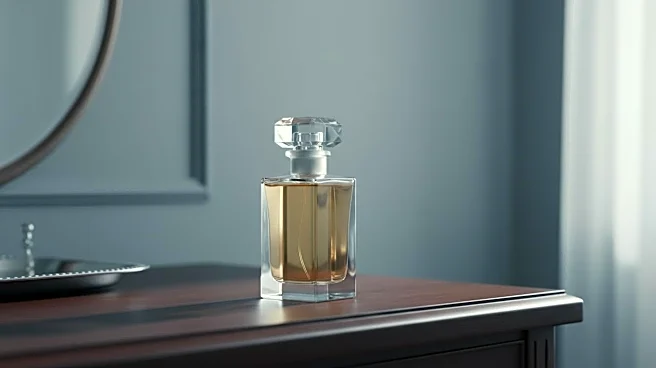
Everything about Chanel No. 5 was designed to be a deliberate break from the past. After selecting the fifth sample vial presented to her, Chanel made another radical choice: the name. In an era of poetic, romantic perfume names like Quelques Fleurs or L'Heure Bleue, simply calling it “No. 5” was stark, scientific, and jarringly modern. The number was also Chanel’s personal lucky charm, and she planned its debut for the fifth day of the fifth month, 1921. The bottle was just as revolutionary. While other perfumes came in ornate, decorative flacons, No. 5 was presented in a minimalist, square-shouldered bottle that resembled a laboratory flask or a whiskey decanter. The design was so clean and unadorned that it put all the focus on the golden liquid inside. This severe simplicity was a visual manifesto against the fussy aesthetics of the time, and another major risk. It was a look that could have been seen as cheap or unfinished rather than chic and timeless.
A Launch Built on Whispers
With such a groundbreaking product, a conventional marketing launch would have been the logical next step. Chanel did the opposite. Instead of a wide release or a grand advertising campaign, the initial launch was an exercise in calculated exclusivity. The strategy began with an intimate dinner party where Chanel surprised her high-society friends by spraying the air with the mysterious new scent. She then began scenting the dressing rooms of her rue Cambon boutique and giving away free bottles to her most influential clients. The goal was to create a buzz through word-of-mouth, to make the perfume an object of desire that you had to be "in the know" to acquire. This approach was a high-wire act; if the elite tastemakers had rejected the scent, the project could have died quietly. The success of No. 5 wasn't immediate in a commercial sense, but it became a status symbol among the fashionable set, an insider’s secret that everyone wanted in on.
The Business of a Legend
Beyond the creative risks, there were significant business hurdles. The first bottles produced in 1922 proved too thin and fragile to survive shipping, forcing a redesign to the stronger, faceted bottle we know today. This kind of production snag could easily derail a nascent product. To achieve global distribution, Chanel entered into a partnership in 1924 with businessmen Pierre and Paul Wertheimer, who already owned the major fragrance house Bourjois. The deal established Parfums Chanel but gave Chanel herself only a 10% stake in the perfume company, with the Wertheimers taking 70% for financing and managing production and distribution. This arrangement would become a source of immense frustration and legal battles for Chanel for decades, as she felt she had been cheated out of the massive profits her creation generated. While the perfume was a cultural success, the contentious business dealings behind the scenes represented another point of extreme pressure that could have fractured the entire enterprise.