







First, It Counts Up, Not Down
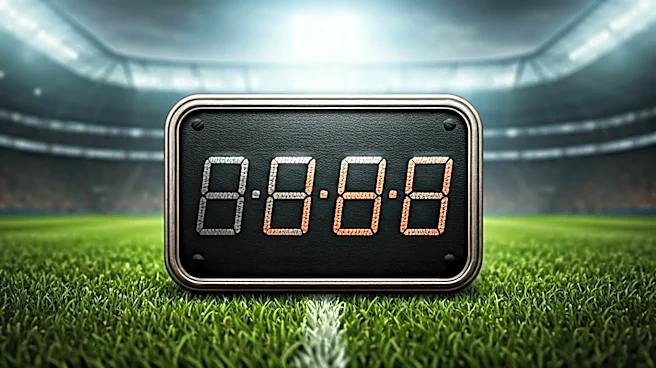
Let’s start with the most obvious difference from American sports. In football, basketball, and hockey, a clock counts down to zero. In soccer, the clock counts up to 90 minutes. The game is divided into two 45-minute halves, and the clock runs continuously, almost never stopping. Think of it less like a game clock and more like a stopwatch measuring the total elapsed time. This fundamental concept—the 'running clock'—is key to understanding everything else. It doesn’t pause for a player stepping out of bounds, a simple foul, or the goalkeeper setting up a kick. The intention is to preserve the sport’s constant flow, a rhythm that is central to its global appeal. This is why you'll see players rush to grab the ball for a throw-in; they know
the clock is mercilessly ticking forward.
The Mystery of 'Stoppage Time'
So, the clock hits 90:00. The game should be over, right? Wrong. This is where millions of new American fans get understandably confused. Welcome to 'stoppage time,' also known as 'added time' or 'injury time.' This is the referee's best estimate of time that was lost during the half due to specific, significant delays. The running clock doesn’t stop for these events, so the referee mentally banks that lost time to be added on at the end of the half. According to the official Laws of the Game, time is added for substitutions, assessment and removal of injured players, goal celebrations, disciplinary sanctions (yellow/red cards), and time-wasting tactics. It’s the game’s way of ensuring a full 90 minutes of action is played, even if it happens in a slightly elastic timeframe.
Who Decides and When?
This is where the human element becomes crucial. The center referee is the official timekeeper. They wear two watches (or one with multiple functions) — one with the running clock and one they stop and start to track lost time. No one else knows the *exact* amount of time they’ve calculated. Near the end of each half, the referee communicates the *minimum* amount of stoppage time to the fourth official, a non-competing official on the sideline. That official then holds up an electronic board displaying the number of minutes to be added. This is a crucial point: it’s a minimum. If there’s a major delay *during* stoppage time (like a VAR review or a bad injury), the referee can extend it even further. The game only ends when the referee blows the final whistle, and only they know when that moment will truly come.
Why Not Just Stop the Clock?
It’s the most logical question for an American fan. Why not just adopt a stop-clock system like in basketball? The answer is rooted in tradition and tactics. Soccer purists argue that a running clock maintains the game’s unique flow and rhythm. A stop-clock would lead to a staccato, start-stop experience, fundamentally changing the feel of the sport. Furthermore, it would alter tactics. A team trying to protect a 1-0 lead might commit dozens of tiny, cynical fouls to stop the clock and break the opponent’s momentum. The current system, while imperfect, places the onus on the referee to manage the game's flow and punish blatant time-wasting with yellow cards. The ambiguity of the clock’s end also creates a unique, nail-biting tension that you simply don’t get when you know a game will end precisely at 0:00.