

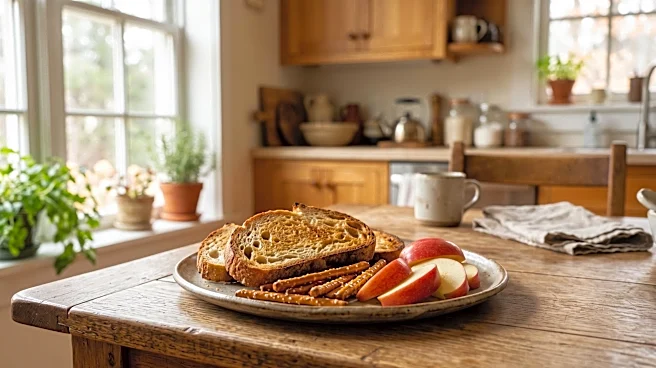


A Comforting Slice of Toast
First broadcast on November 20, 1973, 'A Charlie Brown Thanksgiving' is a product of its time. It reflects a vision of America as it wished to see itself, even amid national turmoil. The plot is simple: after Peppermint Patty invites herself and friends
over, a flustered Charlie Brown, with help from Snoopy and Linus, must host an impromptu Thanksgiving meal before his 'real' family dinner. The resulting feast—toast, popcorn, pretzels, and jelly beans—is a disaster in Peppermint Patty's eyes, but the special's gentle heart quickly corrects course. Marcie reminds her that Thanksgiving is about being together, not about the menu. The special's warm autumn colors, Vince Guaraldi's iconic jazz score, and its ultimate message of gratitude and friendship create a bubble of comfort. It’s a snapshot of idealized childhood innocence, where the biggest crisis is a poorly planned meal that ends with everyone piling into a station wagon, happily off to Grandma’s. It’s 1973 as a warm, reassuring memory, created in the moment.
A Frigid Look Back in Anger
Ang Lee's 1997 film 'The Ice Storm,' based on Rick Moody’s novel, is an autopsy of that same moment. Set in an affluent Connecticut suburb over Thanksgiving weekend 1973, the film uses the era as a backdrop for profound disillusionment. It depicts two families, the Hoods and the Carvers, unraveling under the weight of suburban ennui, casual infidelity, and a complete breakdown in communication between parents and children. While Charlie Brown worried about two dinners, these adults are attending 'key parties'—a cringe-worthy ritual of the sexual revolution where couples swap partners by randomly selecting car keys from a bowl. The film is steeped in the anxieties of the time: the Watergate hearings drone on the television, and the sense of a nation losing its moral compass is palpable. This isn't the gentle, forgiving 1973 of the Peanuts gang. It's a cold, hard, and cynical re-examination from two decades later, where repressed emotions and misguided attempts at 'liberation' lead to tragedy. The titular ice storm is a powerful metaphor, freezing the landscape and reflecting the emotional paralysis of its characters.
An Artifact vs. An Analysis
So, which 1973 is real? Both, of course. The year itself was a pressure cooker of cultural contradictions. The Watergate scandal was eroding public trust in institutions, the country was grappling with the end of the Vietnam War, and an oil crisis loomed. The anxieties that simmer under the surface in 'The Ice Storm' were very real social forces. Adults were navigating a confusing post-sexual-revolution landscape, and the disconnect between generations felt vast. But at the same time, life went on. Children were still children, and the desire for simple, reassuring narratives was as strong as ever. 'A Charlie Brown Thanksgiving' functions as a primary document of that desire. It’s a cultural artifact that shows how popular entertainment provided a necessary escape and a reminder of core values like friendship and togetherness amidst the chaos. It offered a 25-minute reprieve from the evening news, focusing on solvable problems and gentle humor.
Memory, Nostalgia, and Intent
'The Ice Storm' does the opposite. It’s not an escape; it's a deep-dive investigation. As a film made in 1997, it benefits from historical hindsight. Director Ang Lee and screenwriter James Schamus could selectively focus on the decay, using 1973 as a symbolic turning point where the idealism of the '60s curdled into the cynicism of the '70s. The film is a critique, arguing that the pursuit of personal freedom without responsibility left families emotionally bankrupt. The characters' alienation feels both specific to the era's fashions and architecture and timeless in its depiction of human loneliness. 'A Charlie Brown Thanksgiving' is pure nostalgia, designed for immediate, widespread appeal. 'The Ice Storm' is a complex, often uncomfortable work of art that uses nostalgia as a scalpel to dissect the past and reveal the rot beneath the wood-paneled walls.