






An Admirable Idea on Paper
In the world of sports, finding a fair way to separate two tied teams is a perpetual headache. After exhausting head-to-head records, goal difference, and goals scored, what comes next? For the 2018 FIFA World Cup, soccer’s governing body introduced a novel
solution: the Fair Play tiebreaker. The concept was simple and, on its face, admirable. If two teams were identical on every primary metric, the one that had accumulated fewer yellow and red cards throughout the tournament would advance. The goal was to incentivize clean play and discipline. A red card counted as four negative points, a yellow as one, and an indirect red (two yellows) as three. The team with the higher score—meaning more penalty points—would be the one sent home. It was an attempt to legislate sportsmanship, to turn a subjective virtue into a hard, mathematical data point. What could possibly go wrong?
The Stage Is Set: Group H
The rule remained a theoretical curiosity until the final day of Group H matches. The group was impossibly tight. Heading into their last games, Japan and Senegal were tied at the top with four points each, with identical goal difference and goals scored. Colombia was just behind them with three points. The final matches were set: Japan vs. Poland (who were already eliminated) and Senegal vs. Colombia. The permutations were dizzying, but the stage was set for drama. As long as Japan and Senegal matched each other’s results, they would both advance. But a win for Colombia would throw everything into chaos. For 74 minutes, that chaos was kept at bay. Both games were scoreless, and the group table remained unchanged.
A Goal That Changed Everything
Then, in the 74th minute of the Senegal-Colombia match, Colombian defender Yerry Mina scored a towering header. Suddenly, Colombia vaulted to the top of the group. In the other game, Japan was already trailing Poland 1-0. With these results, Japan and Senegal were now perfectly tied for second place—same points, same goal difference, same goals scored. The tiebreaker had to go deeper. The first tiebreaker, the head-to-head result, was a 2-2 draw. So, it came down to the new rule: Fair Play. At that moment, Japan had accumulated four yellow cards in the tournament. Senegal had six. If the scores held, Japan would advance by a razor-thin margin of two yellow cards. The Japanese team, getting word of the Colombia goal from the sidelines, made a stunning calculation. Their best chance of advancing was not to risk scoring an equalizer—which could expose them to a counterattack—or to risk picking up another yellow card. Their best chance was to do nothing.
The Unwatchable End Game
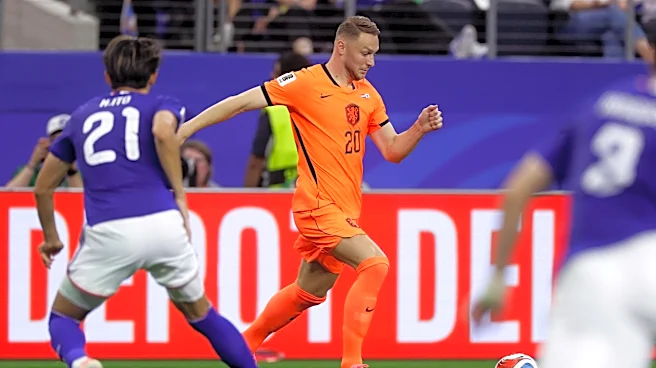
For the final ten minutes, the game between Japan and Poland descended into farce. Japan, knowing they were safe as long as Senegal didn't score, simply passed the ball around their own defensive half, making no attempt to move forward. The Polish players, already winning and content to see the game out, didn't bother to press them. The stadium in Volgograd filled with a chorus of boos and whistles from fans who had paid to see a competitive World Cup match and were instead watching a cynical, tacit agreement to run out the clock. It was a bizarre spectacle, an act of “non-play” that was, ironically, the most logical application of the rules. When the final whistle blew, the Japanese players celebrated a 1-0 loss as if it were a victory. They had successfully lost their way into the knockout stages.
The Unfairness of 'Fair Play'
While Japan celebrated, Senegal was heartbroken. They became the first team in World Cup history to be eliminated by the Fair Play rule. Their coach, Aliou Cissé, was gracious but clearly stung. “It is the law of the game,” he said, but questioned its application. “I’m not sure if it’s a correct rule… We have been eliminated because of it, it’s a sad thing for us.” For many, the outcome felt deeply unjust. A team was punished for playing the game more aggressively, for committing tackles that earned them two more yellow cards over three games than their counterparts. The rule, designed to promote the spirit of the game, had produced a scenario that felt utterly against it. It rewarded passivity and punished the very passion that makes soccer the world’s most popular sport.