
A Lineup Beyond Labels
The Newport Folk Festival has a legacy rooted in tradition, but its modern identity is defined by how gleefully it stretches that definition. The 2026 lineup was a testament to this, placing artists in conversation who might otherwise never share a bill.
You had the searing rock of Tom Morello, whose explosive set was described as the festival's most incendiary, not far from where Ms. Lauryn Hill delivered an acoustic, sing-along set of R&B classics. You could hear the country-to-grunge transitions of a band like Wednesday, who inspired a mosh pit, or the precision funk of The Fearless Flyers. Then there was Irish artist CMAT, whose vibrant “Euro-Country” sound made her a breakout star. This wasn't a folk festival with a few token outliers; it was a deliberate collage of sounds, proving the festival's curation values artistry over allegiance to any single style.
Collaboration as the Main Event
More than any other festival, Newport thrives on the unannounced, the spontaneous, and the collaborative. The schedule often features “& Friends” sets, which are essentially invitations for musical cross-pollination. Friday’s closing slot saw Hayley Williams of Paramore fame hosting a parade of guests, including Joy Oladokun, Jenny Lewis, and a full-circle duet with Jack Antonoff. On Sunday, Nathaniel Rateliff's headlining set became an all-star revue, featuring surprise appearances from Dave Matthews, folk matriarch Joan Baez, Mavis Staples, and Brandi Carlile. These weren't just guest spots; they were unique, one-time-only creations. Lucy Dacus performed a duet of a Jim Croce song with Brandon Flowers of The Killers, while Gillian Welch and David Rawlings offered a resonant acoustic interpretation of Grateful Dead tunes. The magic is in these moments that can't be advertised—the shared stage becoming a testament to mutual respect among musicians.
An Audience Primed for Discovery
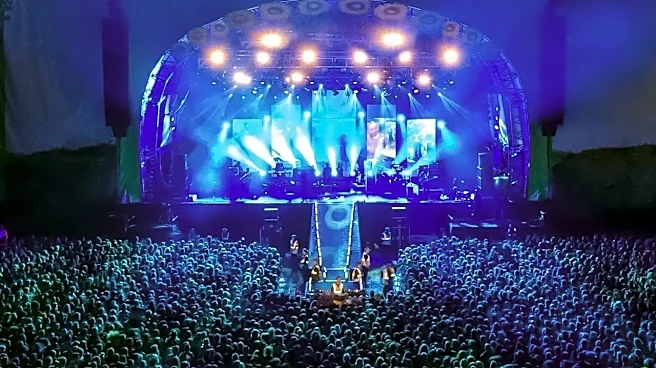
This genre-agnostic approach works because the Newport audience isn’t there for one sound; they are there for the experience. The festival famously sells out months before a single artist is announced, a rare feat built on decades of trust. Attendees wander between five different stages, from the main Fort Stage to the tiny, solar-powered Bike Stage, ready to be impressed by a new artist they've never heard of. The vibe is convivial and low-key, with fans spreading blankets and striking up conversations with strangers about their favorite sets. This shared sense of discovery creates an environment where the soulful R&B of KIRBY, the indie-rock of This Is Lorelei, and the traditional bluegrass of Peter Rowan can all find an equally enthusiastic reception. The audience isn't just passively consuming; they are active participants in an environment built on curiosity.
The Unifying Thread of Songwriting
If genre isn’t the glue holding Newport together, what is? The answer seems to be a deep-seated respect for songwriting and authentic performance. Whether it was John R. Miller, this year’s recipient of the John Prine Songwriter Fellowship, performing a stripped-down bluesy set, or Brandi Carlile rocking an electric guitar for an Alanis Morissette cover, the common element is masterful craft. The festival's social conscience also serves as a unifying force. Tom Morello reminded the audience that folk music has always been about challenging the status quo, while Devon Gilfillian's “Sea to Shining Sea” project featured politically tinged anthems. Ultimately, Newport has evolved beyond its name. It’s no longer just a folk festival, but a festival for people who love the art of the song, in whatever form it takes.