


In the classic tale, she's the hero. But in the world of 'Wicked,' Dorothy Gale is something far more complicated. Her arrival in Oz is the catalyst that changes everything for Elphaba, reframing the entire narrative we thought we knew.
An Off-Stage Force of Nature
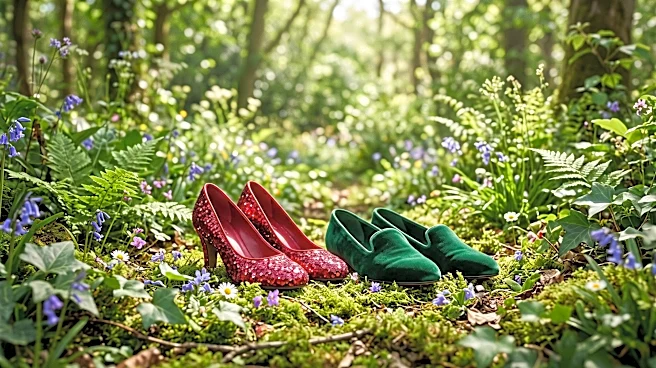
In the Broadway
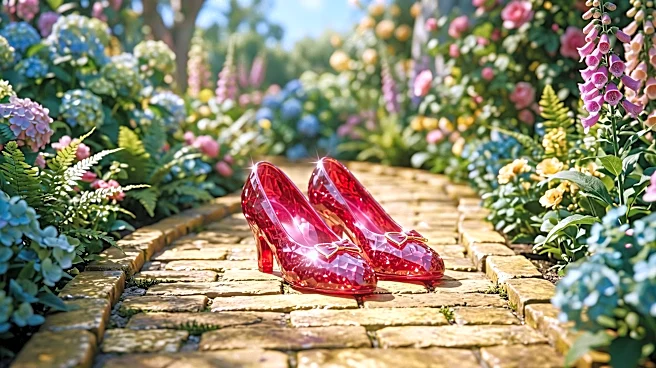
musical, Dorothy's most powerful trait is her absence. For much of the story, she is a ghost from another world, a pawn in a game she doesn't understand. Her house falls from the sky, a freak act of weather orchestrated by Madame Morrible, killing Nessarose, Elphaba’s sister. Instantly, this unseen girl from Kansas becomes a pivotal figure. Glinda, in a moment of questionable judgment, gives Nessarose’s powerful ruby slippers to Dorothy, setting in motion a collision course. Dorothy is never a true character on stage; she is a symbol, a narrative device spoken to in the wings or represented by a silhouette. By keeping her offstage, the story cleverly forces the audience to focus entirely on Elphaba and Glinda, making Dorothy's destructive path through Oz feel like a series of unfortunate, impersonal headlines that just keep getting worse for our green-skinned protagonist.
The Accidental Antagonist
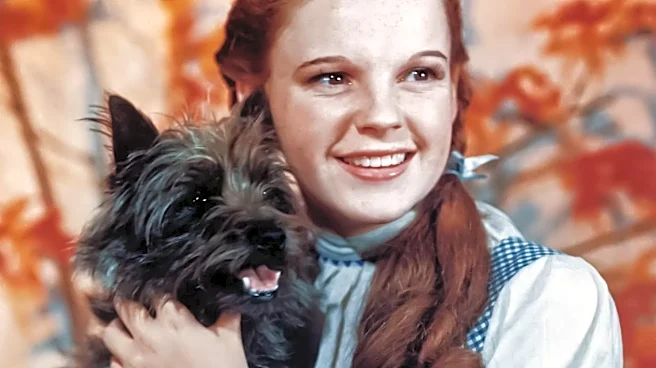
Dorothy isn't evil; she’s just tragically effective. Guided by the seemingly benevolent Wizard, she becomes the unwitting agent of his corrupt regime. Everything she does to be the 'hero' directly undermines Elphaba's crusade. Elphaba fights for the rights of the Animals of Oz, who are being stripped of their speech and autonomy. Then Dorothy appears, cheerfully leading Toto on a leash—a small but potent symbol of the very control Elphaba is fighting against. Each of Dorothy's companions on the Yellow Brick Road is a painful reminder of Elphaba's losses: the Scarecrow is linked to her lost love Fiyero, and the Tin Man to her sister's tragic rule. Dorothy is not a villain plotting destruction; she is a naive girl whose quest for home results in the dismantling of Elphaba’s life and work, piece by painful piece.
A Cinematic Shift in Focus
The two-part film adaptation, 'Wicked' and 'Wicked: For Good,' had to make a choice: keep Dorothy a myth or put a face to the name. Director Jon M. Chu opted for a clever middle ground. While Dorothy, played by Bethany Weaver, has a physical presence, her face is deliberately obscured. We see her from a distance or in shadow, preserving the audience's personal image of the iconic character while making her impact more tangible. This approach allows the films to explore her influence more directly than the stage show. We see her receive the slippers from Glinda and get tasked by the Wizard to hunt Elphaba. By showing her actions, even from a distance, the films emphasize how easily she becomes a tool of propaganda, cementing her as an antagonist from the audience's pro-Elphaba point of view, whether she intends to be or not.
The Hero Who Solidifies the Legend
Ultimately, Dorothy's greatest role in 'Wicked' is to complete Elphaba's transformation—not into a villain, but into a legend. In Gregory Maguire's novel, on which the musical is based, Dorothy is a terrified girl who accidentally kills Elphaba with a bucket of water while trying to put out a fire. In the musical and films, this act, seen only in silhouette, is her final, devastating contribution to the story. She 'melts' the witch, becoming the celebrated hero of Oz and cementing the Wizard's false narrative. But in doing so, she also triggers Elphaba’s escape with Fiyero, allowing them to finally be free from Oz's persecution. Dorothy's 'victory' is what allows Elphaba to achieve a different kind of happy ending, one where she is free, even if her name is forever cursed. Dorothy may have won the battle for Oz's approval, but her actions ensure Elphaba wins the war for her own soul.