




A Tale of Two Narratives
The 2015 Academy Awards presented a classic Hollywood storyline for Best Actor. On one side was Michael Keaton, the veteran enjoying a spectacular career resurgence with "Birdman." On the other was Eddie Redmayne, the talented British newcomer who underwent
a staggering physical transformation to play Stephen Hawking in "The Theory of Everything." The stage was set for a dramatic showdown: the sentimental favorite versus the technical masterclass. For much of the awards season, the momentum seemed to be with Keaton, whose role as a washed-up superhero actor trying to mount a serious Broadway comeback mirrored his own journey away from and back to the spotlight after his iconic turn as Batman. It was a meta-narrative almost too perfect to ignore, positioning him as the emotional frontrunner.
The Power of the Comeback Kid
Michael Keaton's performance in "Birdman" was universally praised. He wasn't just acting; he was channeling decades of his own unique Hollywood experience into the role of Riggan Thomson. The film itself was a critical darling, a technically audacious feat presented as if filmed in a single shot, and it went on to win Best Picture, Best Director, and Best Original Screenplay. The synergy between Keaton's personal story and his character's arc made him the odds-on favorite for a significant portion of the race. His win at the Golden Globes for Best Actor in a Comedy seemed to solidify his path to Oscar glory. For many viewers and industry insiders, a Keaton win would have been the perfect capstone to a remarkable comeback story.
The Academy's Love for Transformation
While Keaton had the narrative, Eddie Redmayne had the kind of role the Academy historically adores: the transformative biopic. Portraying a real-life figure with a severe physical disability is a well-worn path to Oscar gold. Think of Daniel Day-Lewis in "My Left Foot" or Colin Firth in "The King's Speech." Redmayne's depiction of Stephen Hawking's gradual physical decline from ALS was a feat of immense technical skill and dedication. He reportedly worked with a movement coach to master the specific stages of the disease, a commitment that was visible in every frame. This type of quantifiable effort—the sheer, visible work of acting—often appeals to Academy voters more than a performance that, however brilliant, is more internal or based on persona. It was, by all accounts, classic Oscar bait.
How the Race Was Really Won
The tide began to turn with the precursor awards. While Keaton won the Golden Globe for Comedy, Redmayne won for Drama. More critically, Redmayne won the Screen Actors Guild (SAG) Award for Best Actor. The SAG Awards are voted on by actors, the largest branch of the Academy, making their results a powerful predictor of Oscar outcomes. Redmayne’s win there signaled a genuine shift in momentum. Beyond the awards circuit, Redmayne ran a famously charming and relentless campaign. He was an enthusiastic and visible presence, while "The Theory of Everything" itself was a more traditional and emotionally accessible film than the artistically complex and satirical "Birdman." This combination of a classic performance, a heartfelt film, and a tireless campaign proved to be a winning formula, appealing directly to the Academy's more traditional sensibilities.
The 'Upset' That Wasn't
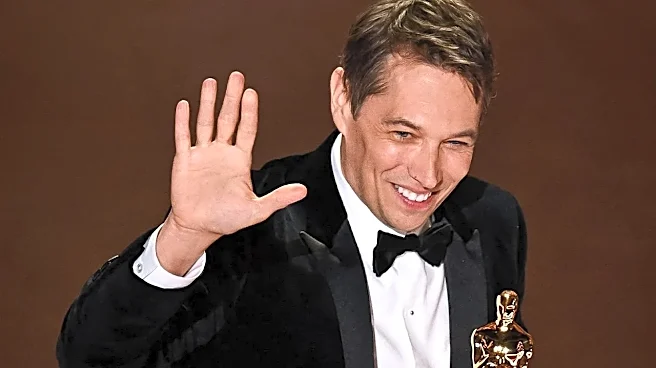
So, was it a true upset? While Keaton was the sentimental favorite, Redmayne's victory was the logical conclusion of a race where tradition ultimately outweighed narrative. In hindsight, it was a battle between two very different, but equally valid, philosophies of what constitutes a "Best Actor" performance. Keaton himself seemed to know what he was up against. He later recounted an Oscar voter telling him that despite the praise for his role, "illness always wins." That cynical take reflects a long-standing Academy pattern. Redmayne’s win wasn't a shocking fluke; it was a confirmation that the 'most acting'—the kind that involves visible, dramatic transformation—often carries the day. His emotional acceptance speech, in which he dedicated the award to all people battling ALS, cemented the moment as a classic Oscar victory.