







A Quiet Symbol Finds its Voice
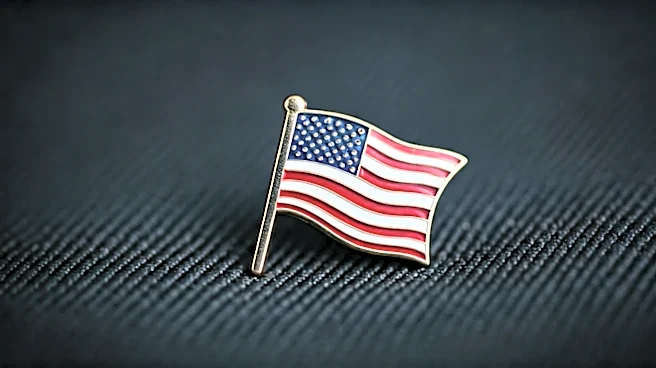
Before it became a near-mandatory accessory in Washington, the American flag lapel pin had a much quieter existence. While patriotic jewelry has been around for centuries, the modern political use of the flag pin is often traced back to the late 1960s.
As President Richard Nixon sought to rally what he termed the “silent majority” of Americans against Vietnam War protestors and counter-culture movements, symbols of traditional patriotism became potent tools. The flag pin was a subtle, wearable declaration of allegiance to a particular vision of America—orderly, proud, and unwavering. It allowed supporters to physically align themselves with this vision without saying a word. For decades, it remained just that: a respectable, if optional, accessory for the patriotic professional, seen at VFW halls and political conventions but not yet a fixture of the daily uniform.
The Day Everything Changed
The story of the flag pin, like so many stories in modern America, was irrevocably split into a “before” and an “after” by the events of September 11, 2001. In the days following the attacks, the nation was gripped by a tidal wave of grief, fear, and a desperate search for unity. The American flag appeared everywhere—draped from overpasses, flying from car antennas, and, most visibly, pinned to every lapel in sight. Republican Congressman Allen West, a retired Army lieutenant colonel, reportedly bought out a local supply and handed them out to his colleagues on the Capitol steps, urging them to wear the pin as a sign of solidarity and resolve. It was no longer a subtle political signal but a visceral, emotional statement: We are united. We will not be broken. For news anchors, politicians, and public figures, wearing the pin became an unspoken requirement, a piece of symbolic armor in a wounded nation.
The Politics of the Pin
The pin’s meaning shifted again during the 2008 presidential election. When then-candidate Barack Obama appeared at a debate without a flag on his lapel, it ignited a firestorm. He was accused of lacking patriotism. In response, Obama explained his reasoning, stating that he had stopped wearing it shortly after 9/11 when he noticed it had become a substitute for “true patriotism,” which he defined as speaking out on behalf of soldiers and veterans. He later clarified, “I'm less concerned with what you're wearing on your lapel than what's in your heart.” The controversy revealed a deep divide. What had been a symbol of national unity was now being interpreted by some as a litmus test for political loyalty. Obama eventually began wearing the pin again, but the episode proved that the tiny flag had become a loaded emblem, capable of starting a national conversation all on its own.
A Loaded Emblem Today
Today, the flag lapel pin occupies a complex space. For millions of Americans, including veterans and their families, it remains a pure and simple expression of love for country and respect for those who serve. It’s a quiet nod to a shared identity. Yet in the polarized landscape of American politics, it can also be seen as a partisan signal, a visual shorthand for a specific set of beliefs. The decision to wear one—or not to—is scrutinized. Its meaning is no longer universal but is largely in the eye of the beholder. Does it signify genuine patriotism, or is it what critics call “performative patriotism”? Does it signal unity, or does it represent a specific political tribe? The answer depends entirely on who you ask.