
The Old Way: A Recipe for Frizz
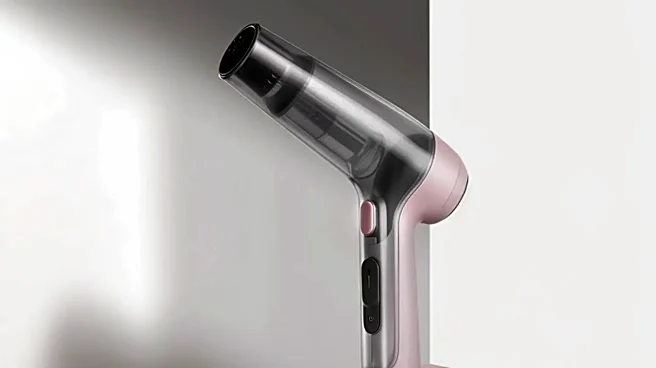
For decades, the hair dryer was an instrument of brute force. Invented in the late 19th century and popularized for home use through the 20th century, its primary function was to blast hair with hot air. Diffuser attachments, introduced in the 1980s,
were meant to be a gentler alternative, but without a specific methodology, they often just created a wider, less focused blast of frizz-inducing air. Many users would wave the diffuser around their head, breaking up delicate curl patterns and roughing up the hair's cuticle. The result was often the very thing they were trying to avoid: undefined, frizzy, and unpredictable curls. Air-drying, the other main option, could take hours and often led to flat roots and its own brand of frizz, especially if the hair was touched before it was fully dry.
The Breakthrough: Mastering the Method
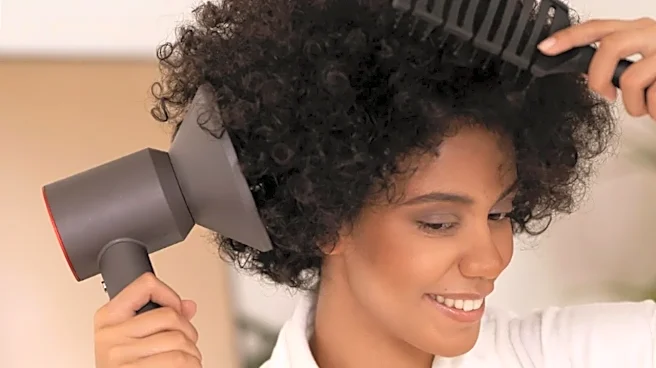
The revolution wasn't in a new invention, but in a new approach. Techniques like "pixie diffusing" and "hover diffusing" gained traction, spreading rapidly through online forums, blogs, and eventually social media. Pixie diffusing, in particular, became a game-changer. The method involves placing a section of curls into the diffuser's bowl, lifting it toward the scalp, and only then turning the dryer on. After holding for 20-30 seconds on a low-speed, low-heat setting, the dryer is turned off before moving to the next section. This deliberate, hands-off process prevents the hair from being blown around, allowing curl clumps to dry intact and dramatically reducing frizz. It encourages the hair’s natural pattern, enhances volume at the root, and creates long-lasting definition.
From Niche Technique to Mainstream Movement
The rise of correct diffusing coincided with the natural hair movement—a cultural shift celebrating, rather than chemically altering, natural hair textures. This wasn't just about hair; it was about empowerment. Armed with this new knowledge, people discovered the curls they never knew they had, or learned to manage the curls they always struggled with. For the first time, achieving salon-quality results at home felt possible. This simple technique demystified curly hair care for millions, proving that the problem was never the hair itself, but the lack of proper knowledge and tools. It shifted the narrative from 'taming' unruly hair to 'defining' and 'enhancing' its natural beauty.
How the Industry Finally Caught Up
This grassroots movement had a massive ripple effect on the hair care industry. As consumers became more educated, they demanded better products. Suddenly, there was a booming market for curl-specific gels with strong hold to create a "cast," lightweight mousses, deep conditioners, and heat protectants formulated for delicate textures. Hair dryer companies began designing more advanced diffusers with deeper bowls and longer prongs. Salons that once specialized in straightening treatments began to rebrand as curly hair experts, offering services and education centered around natural texture. The power dynamic shifted; instead of the industry telling consumers what they needed, consumers, empowered by shared knowledge, told the industry what to create.