









The Agony of the Block-Charge
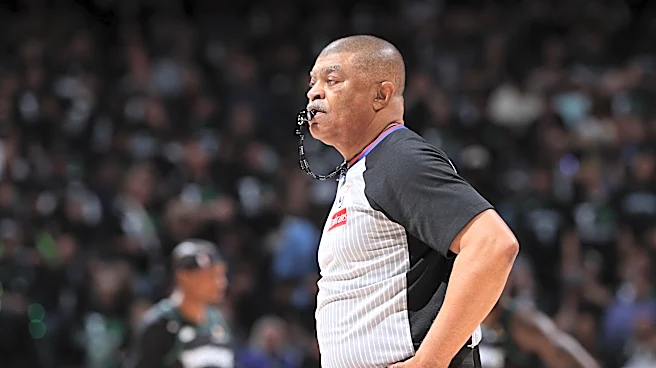
Let’s start with the familiar. In basketball, the block-charge is the ultimate “he said, she said” of split-second physics. The rule seems simple enough: a defender can’t impede the path of an offensive player unless they’ve established legal guarding
position before contact. But “established” is a philosophical question masquerading as a sports rule. Were their feet set? Were they in the restricted area? Did the offensive player veer off their path to create contact? It’s a mess of subjectivity that sends coaches into fits and has fans dissecting Zapruder-film-level replays where the truth remains elusive. The call often feels less like an application of a rule and more like a gut feeling from the official. It’s this ambiguity—the space between the rulebook and reality—that makes the call so maddening.
Soccer's Penalty Box Conundrum
Now, welcome to the penalty box in a high-stakes soccer match. This is soccer’s version of the block-charge, but with the game on the line. An attacker dribbles into the 18-yard box, a defender makes a challenge, and the attacker goes down. The referee points to the spot: penalty kick. The attacking team erupts; the defending team is apoplectic. The question is identical in spirit: Was there really a foul? The debate isn't about whether contact occurred, but about its significance. Was it a legitimate, cynical foul, or did the attacker embellish a slight touch, turning a harmless bump into a dramatic, game-changing fall? This is the art of “simulation,” or what we’d call flopping. It’s the soccer equivalent of a player launching himself backward to “sell” a charge, turning the official into an unwilling accomplice.
VAR and the Millimeter Offside
If you think instant replay solves these things, soccer has a story for you. It’s called VAR, or Video Assistant Referee. Just like NBA refs go to the monitor to check a defender’s foot placement, VAR officials in a remote room scrutinize plays for infractions. The most block-charge-like application is the offside rule. A forward makes a brilliant run and scores, only for the goal to be put “under review.” For the next three minutes, fans watch as digital lines are drawn across the field on their TV screens. Was the attacker’s shoulder a millimeter past the last defender’s big toe when the ball was kicked? Technology promises objectivity, but in practice, it often creates a new kind of frustration. A breathtaking moment of skill is nullified by a detail invisible to the naked eye. It’s the sporting equivalent of a lawyer winning on a technicality—correct by the letter of the law, but emotionally unsatisfying.
What Is a Handball, Anyway?
Perhaps no rule in soccer is more bafflingly subjective than the handball. The concept is simple: you can’t deliberately play the ball with your hands or arms. But what is “deliberate”? What if your arm is in a “natural” position while running, and the ball cannons into it from two feet away? What if it hits your sleeve? What if your arm makes your body “unnaturally bigger”? The rule has been re-written so many times it feels like a philosophical text. Every season brings a new interpretation, leaving players, coaches, and fans in a permanent state of confusion. This is the ultimate parallel to the block-charge. It’s not about what happened, but the *intent* and *context* of what happened—two things that are nearly impossible for a referee to judge with 100% accuracy in real-time.