




The Challenge of Magical Realism
Director Blitz Bazawule’s vision for the musical adaptation of The Color Purple was ambitious: to visualize the rich, imaginative inner world of its protagonist, Celie. As she endures hardship, Celie escapes into vibrant daydreams, and Bazawule wanted
to bring these fantasies to life without pulling the audience out of the story's grounded, early 20th-century setting. The core crisis was not one of budget explosions or on-set disasters, but a creative and logistical one: how do you translate the grand, abstract magic of a Broadway musical to the screen in a way that feels both spectacular and emotionally real? The team had to figure out how to stage elaborate, choreographed numbers in intimate, historically accurate spaces, a puzzle that conventional CGI couldn't easily solve. The goal was to make these dreamscapes tangible extensions of Celie's reality, not disconnected digital fantasies.
An Old-School Solution
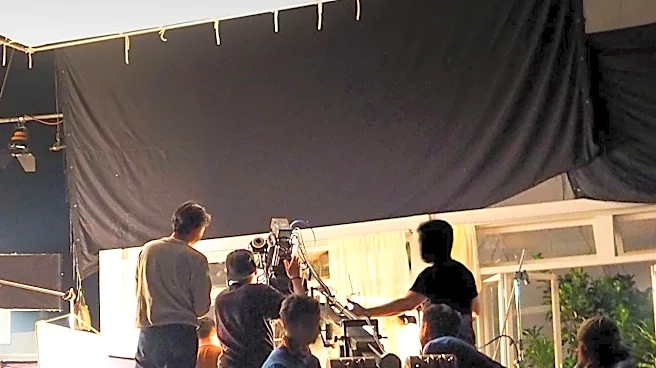
Instead of relying heavily on green screens, Bazawule and his production designer, Paul D. Austerberry, made a deliberate choice to use practical, in-camera effects whenever possible. This approach meant building oversized sets, using forced perspective, and employing clever camera work to create a sense of wonder. This decision was partly philosophical—grounding the fantasy in reality—and partly a brilliant solution to a logistical problem. For instance, building a key location like Harpo's juke joint in an actual swamp was a major undertaking. The team found a suitable location, but the water levels were unpredictable. Their solution was to drain a dammed lake, build the set on the muddy ground, and then flood it again, ensuring perfect control over the environment for filming. This kind of hands-on problem-solving became the film's secret weapon.
Building Celie's Fantasies
The film’s most memorable sequences are masterclasses in practical ingenuity. For the scene where Celie imagines herself inside a giant gramophone, the team built a massive, functional prop. This allowed the actress, Fantasia Barrino, to physically interact with her surroundings, creating a more grounded and believable performance than acting against a green screen would have allowed. Similarly, for a sequence featuring Shug Avery (Taraji P. Henson) atop a spinning record, the effect was achieved with a large-scale, rotating set piece. Austerberry noted that designing for a musical meant the sets had to be more than just backdrops; they had to be safe, functional platforms for dancers to jump, flip, and interact with. This necessity for physical, durable sets reinforced the decision to build the magic rather than add it in post-production.
The Human Element of Effects
This commitment to practical effects had a profound impact on the cast. While a different kind of production crisis unfolded regarding pay and on-set conditions for the actors, the creative approach on set gave them something real to work with. Acting is reacting, and interacting with a giant, physical set piece provides a tangible reality that helps ground a performance, especially in a fantastical scene. Director Blitz Bazawule storyboarded the entire film—creating a two-hour pencil-sketch version with voice actors—to ensure his whole 500-person crew was aligned on the vision. This clarity allowed the actors and the below-the-line artisans to build the world together. The result is a performance style that feels emotionally connected, even at its most surreal. The film’s magic feels earned because, in many ways, it was physically constructed right there on set.