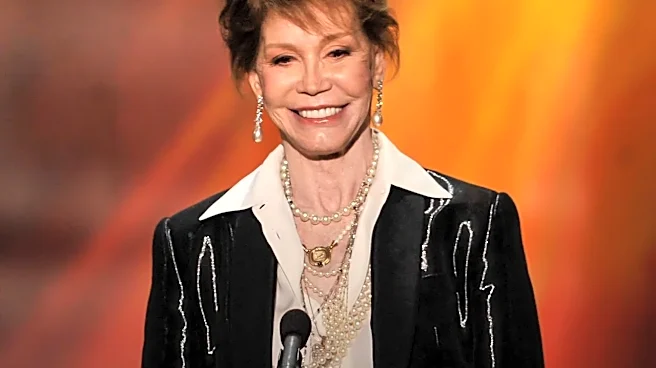










A Radical Departure for America's Sweetheart
In 1980, Mary Tyler Moore was the woman who could turn the world on with a smile, an image cultivated through years of beloved sitcoms like 'The Dick Van Dyke Show' and 'The Mary Tyler Moore Show'. So when director Robert Redford cast her in his somber
directorial debut, 'Ordinary People,' many were skeptical, including the studio. Redford saw something deeper in Moore, a glimpse of a solitary, thoughtful person behind the public persona. He wanted her for the role of Beth Jarrett, a wealthy, perfectionistic mother grappling with the death of her favorite son and the subsequent suicide attempt of her other, Conrad. It was a brave, career-altering move for Moore, who took on a character that was cold, distant, and profoundly broken—the antithesis of everything audiences had come to love about her.
The Scene That Sparked a Debate
The conflict came to a head over one specific, devastating scene. In it, Beth discovers that her son Conrad (played by Timothy Hutton) has quit the swim team, a painful reminder of his older brother, who was a star swimmer before his drowning death. Conrad follows his mother into her pristine, orderly closet, and what unfolds is not a moment of maternal comfort but one of brittle, icy confrontation. Beth is more concerned with appearances and control than with her son’s emotional turmoil. Her dialogue is sharp and punishing, revealing a woman so encased in her own grief and resentment that she is incapable of providing love. Studio executives were reportedly horrified. They felt the scene made Beth irredeemably monstrous and feared it would alienate audiences who came to see Mary Tyler Moore, the icon. They wanted it cut.
Why Redford Fought to Keep It
Robert Redford, however, knew the scene was the lynchpin of the entire film. He argued that it was the single moment that unlocked Beth's character for the audience. Without it, her motivations would remain opaque, and her final actions in the film would feel unearned. It was the raw, unfiltered truth of who this woman had become in the face of unbearable tragedy. Her obsession with perfection and privacy wasn't just superficial; it was a desperate defense mechanism against a world that had fallen apart. The scene laid bare the psychological reality of the Jarrett family: a household where image trumped emotion and a mother's love had become conditional. Moore's performance in this moment was unflinching, capturing a simultaneous external coldness and internal fear that was astonishing to witness.
A Legacy-Defining Moment
Redford won the battle, and the scene remained. Its inclusion is now regarded as one of the most critical decisions in the making of the film. 'Ordinary People' went on to win the Academy Award for Best Picture, with Redford also winning for Best Director and Timothy Hutton for Best Supporting Actor. Moore herself received a Best Actress nomination, an acknowledgment that she had successfully and brilliantly shattered her own typecasting. The closet scene is the emotional core of that achievement, a masterclass in subtlety and repressed fury. It demonstrated Moore's incredible range and courage as a performer, willing to explore the darkest corners of a character, even at the risk of being hated for it. The woman America saw as a paragon of warmth proved she could be just as convincing as a portrait of its absence.