






The Old Story: A Destiny Foretold
For nearly a century, the story of a Kryptonian arriving on Earth has been synonymous with destiny. Superman, the Last Son of Krypton, was sent to be a light for humanity, a messianic figure whose greatness was preordained. His journey is about accepting
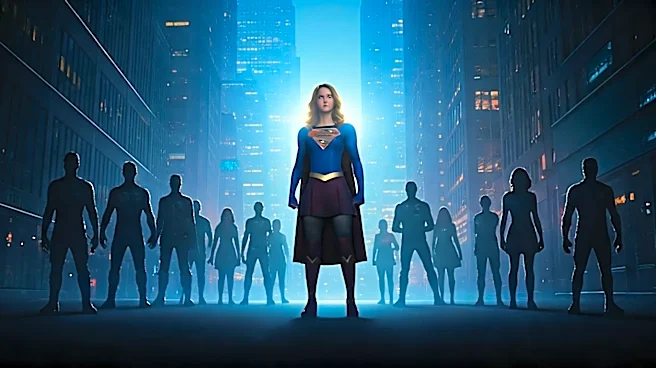
his fate as the world’s greatest hero. It’s a powerful, foundational myth, but it’s also a creatively restrictive one. Every adaptation has, to some degree, played with this theme of a man born to save the world. Historically, Supergirl has been trapped in the gravity of that same narrative. As Kara Zor-El, Superman’s cousin, her story is often treated as a B-side to his A-side. She, too, arrives from a dead world. She, too, has incredible powers. And she, too, is expected to step into a heroic role. The 'S' on her chest isn't just a family crest; it's a pre-written job description. This approach has always kept her in her cousin's shadow, making her story feel like a re-run with a slightly different lead.
A Legacy of Second Place
The core problem with the destiny trope for Supergirl is that it’s not even *her* destiny. It’s her cousin’s. She is perpetually defined by her relationship to Kal-El. Is she as strong as him? Is she as good as him? Can she live up to the standard he set? The CW’s *Supergirl* series spent much of its run navigating this dynamic. While it successfully carved out its own identity, the show constantly had to address the specter of the more famous hero just off-screen. It’s an impossible standard for a character to bear. This framing reduces Kara to a receptacle for someone else’s legacy. The cape and crest become hand-me-downs. For the new movie to break new ground, it must shatter this paradigm. The 'S' cannot be a symbol of hope she effortlessly inherits. For her, it must be a crushing weight. It must represent everything she lost and a future she never asked for.
The 'Woman of Tomorrow' Blueprint
Fortunately, the film has the perfect source material to achieve this. The movie is based on Tom King and Bilquis Evely’s comic series, *Supergirl: Woman of Tomorrow*, which presents a radically different Kara Zor-El. This isn't a cheerful rookie hero learning the ropes. This is a young woman who is fundamentally broken. Unlike Clark, who left Krypton as a baby with no memory of his home, Kara was a teenager. She watched her planet die. She saw her parents and friends perish. She arrived on a primitive planet, Earth, only to live in the shadow of a cousin who was raised as a local god. This Kara is cynical, world-weary, and adrift. The power she possesses isn't a gift; it's a constant, painful reminder of the home she can never reclaim. In the comic, she's celebrating her 21st birthday by getting drunk in an alien dive bar, looking for a fight. This is a character not burdened by a heroic destiny, but by profound, unprocessed trauma. Her journey isn't about becoming Superman; it's about deciding if she even wants to be Supergirl.
Why Pressure Is More Interesting Than Power
By shifting the focus from destiny to pressure, the film can unlock a far more compelling and relatable hero’s journey. Instead of a story about a god learning to be human, it becomes a story about a refugee trying to find her place in the universe. The pressure she feels isn’t just about living up to Superman; it's the internal pressure of surviving when everyone you loved didn't. It’s the pressure of wielding god-like power when you feel empty inside. It's the pressure of a symbol that promises hope to others but only brings you pain. This is the movie’s hardest job and its greatest opportunity. Can it make audiences feel the weight of that cape? Can it portray the 'S' not as an emblem of effortless virtue but as a heavy mantle that Kara must choose to wear every single day, despite every fiber of her being wanting to cast it aside? If it can, it won’t just be another superhero origin story. It will be a story about resilience, choice, and the messy, difficult work of forging a purpose when destiny has failed you.