






It’s About Awe, Not Annihilation
Here’s the one reason: Steven Spielberg, at his core, treats contact not as an invasion plot but as a catalyst for human wonder. While most alien movies are about what happens when *they* arrive, Spielberg’s are about what happens inside *us*. Other directors
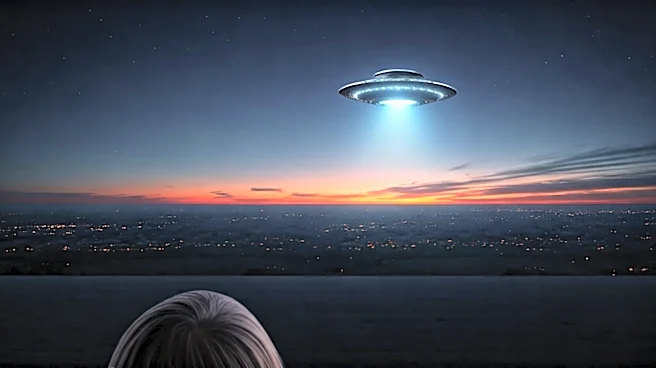
use UFOs to explore our fears—of the unknown, of being conquered, of losing our identity. Spielberg uses them to explore our capacity for awe. His aliens aren't just a threat to be neutralized or a puzzle to be solved; they are a cosmic mirror, reflecting our own potential for connection, curiosity, and spiritual awakening. The encounter is a transcendent, often religious experience, where flashing lights and strange sounds are a hymn, not a warning.
The Blueprint: Close Encounters and E.T.
This philosophy is the DNA of his two masterpieces in the genre. *Close Encounters of the Third Kind* (1977) isn’t a story about aliens visiting; it’s about a man, Roy Neary, consumed by an artistic and spiritual calling he can’t explain. The UFOs inspire an obsessive creativity—a holy madness—that leads him not to a battlefield, but to a symphony of light and sound. The five-tone musical phrase is the ultimate expression of this idea: the first step toward communication is harmony, not hostility. Five years later, *E.T. the Extra-Terrestrial* (1982) miniaturized this epic scope into the story of a lonely boy who finds his soulmate in a lost creature from the stars. The film is drenched in a sense of childlike wonder, where the alien is a source of healing, friendship, and empathy. The government agents who hunt E.T. aren’t just antagonists; they represent the death of that wonder—a cynical, sterile worldview that can’t comprehend a connection not based on threat assessment.
How Everyone Else Does It
Contrast this with the rest of the genre. Ridley Scott’s *Alien* turned the encounter into body horror. Roland Emmerich’s *Independence Day* made it a patriotic war film. M. Night Shyamalan’s *Signs* framed it as a faith-based home invasion thriller. Even intellectually ambitious films like *Arrival* focus on the cerebral puzzle of communication as a means to avert disaster. More recent fare like *District 9* uses aliens as a powerful allegory for apartheid and xenophobia. These are all valid, powerful approaches that use extraterrestrials to comment on humanity’s darker impulses: our tribalism, our violence, and our paranoia. They are, almost without exception, about conflict.
The Exception That Proves the Rule
But what about Spielberg’s own invasion movie, *War of the Worlds* (2005)? This is where his signature becomes clearest. The film is brutal, terrifying, and relentlessly grim. The aliens are merciless killing machines. Yet, the camera never truly focuses on them. It stays locked on Tom Cruise’s Ray Ferrier, an imperfect father trying to get his kids to safety. The film isn’t about intergalactic war; it’s a ground-level story about parental terror and the disintegration of society. By stripping away any chance for wonder and communication, Spielberg shows that the true horror isn't the aliens themselves, but a world suddenly devoid of the hope that defined his earlier films. The absence of awe is the real monster.