





The Dawn of a Golden Generation
Around 2012, something remarkable happened in the small nation of Belgium. A seemingly endless conveyor belt of talent began producing some of the most exciting young players on the planet. There was the mesmerizing dribbler Eden Hazard, the midfield
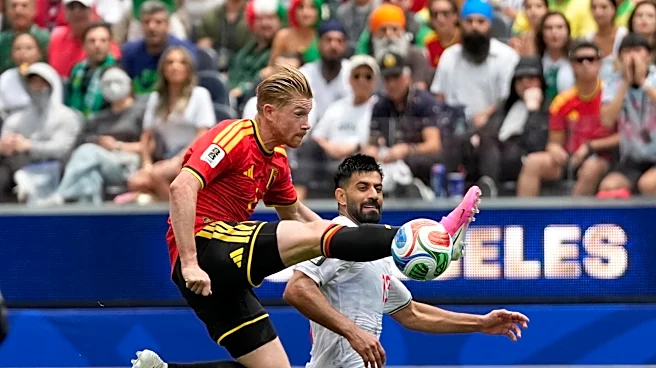
puppet-master Kevin De Bruyne, the powerful striker Romelu Lukaku, the unflappable goalkeeper Thibaut Courtois, and the commanding defender Vincent Kompany. Individually, they were brilliant, signing for Europe’s biggest clubs. Together, they were dubbed the “Golden Generation,” a collection of superstars destined to lift Belgium from soccer obscurity to international glory. For a country that hadn’t qualified for a major tournament in a decade, this wasn’t just a team; it was a phenomenon. They rocketed to the top of the FIFA world rankings, holding the No. 1 spot for years, and the expectation was clear: trophies were not a question of if, but when.
The Agony of the Near Miss
Every great sports story needs a defining moment, and for Belgium’s Golden Generation, the 2018 World Cup in Russia was supposed to be it. They played with a breathtaking attacking flair, culminating in a thrilling quarter-final victory over Brazil that felt like a coronation. This was their time. But in the semi-final against a pragmatic and disciplined French side, the dream hit a wall. A single goal from a corner kick was enough to end their run. While they went on to win the third-place match, securing their best-ever World Cup finish, it felt like a consolation prize for a team built for the main event. In hindsight, this was their peak. It was the moment the window was wide open, the sun was shining through, and they had every tool to climb out and seize the prize. They just couldn't quite make it over the ledge.
When the Cracks Begin to Show
If 2018 was the peak, the 2022 World Cup in Qatar was the valley. The swagger was gone, replaced by frustration and friction. Before the tournament, De Bruyne famously told the media the team had “no chance” to win because they were “too old”—a shockingly candid admission that hinted at deeper issues. Reports of dressing-room arguments between senior players filled the sports pages. On the field, they looked disjointed and slow, crashing out in the group stage without so much as a whimper. This wasn't just a team in decline; it was a team that seemed to have lost faith in itself. The promise of the Golden Generation had curdled into a public drama of unmet expectations and simmering resentment. The window wasn’t just closing; the frame was starting to splinter.
The Window Finally Slams Shut
By the time Euro 2024 arrived, the narrative had completely shifted. Eden Hazard had retired. Other key figures from the original generation were gone or playing diminished roles. While De Bruyne and Lukaku were still there, the magic felt different. The team was no longer a juggernaut but a squad reliant on the lingering brilliance of its aging stars. Their eventual exit, again to France, felt less like a heartbreaking shock and more like an inevitability. It was the quiet, anticlimactic end to a story that once promised so much noise. This is how talent windows close. It’s rarely a single, dramatic slam. More often, it’s a slow, grinding process: a key player ages, a crucial match is lost, chemistry fades, and the collective belief that made the impossible seem possible simply evaporates.