
A Hootenanny with a Purpose
To understand the current arguments, you have to go back to the beginning. Founded in 1959 by George Wein and folk luminaries like Pete Seeger, the festival was a counterpart to the already successful Newport Jazz Festival. Its goal was to showcase the vast
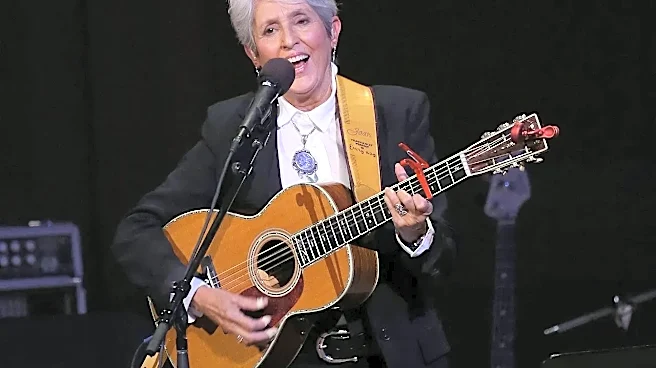
diversity of American folk music, from rural Appalachian traditions to urban protest singers. This was the era of the great folk revival, a time when music was seen as a tool for social change, a voice for the voiceless, and a direct link to a shared American heritage. Artists like Joan Baez, who had a surprise debut in 1959, and the Freedom Singers, who brought the anthems of the Civil Rights Movement to the main stage, cemented Newport's identity as more than just a music festival; it was a cultural and political gathering. The music was often acoustic, rooted in storytelling, and performed by and for “the people,” a direct contrast to commercial pop.
The Shot Heard 'Round the Folk World
Then came July 25, 1965. Bob Dylan, who had been crowned the prince of folk at Newport in previous years, took the stage with a Fender Stratocaster and an amplified band. He launched into a snarling version of “Maggie’s Farm,” and a sound crisis was born. The audience's reaction has been debated for over half a century—some claim the boos were about the terrible sound mix, others the short set length—but the dominant narrative is one of betrayal. The man who was “their” voice, the voice of acoustic purity and protest, had plugged in. He had gone rock and roll. This moment is the foundational crack in the definition of “folk” at Newport. It established a conflict that still echoes today: Is folk a specific sound defined by acoustic instruments and traditional forms, or is it something more adaptable?
From Banjos to Synths
In the decades since, and especially after its revival in 1985, Newport has continued to push the boundaries its own audience helped create. The festival has evolved into what one longtime attendee called an “Indie Rock-Americana-Inflected Country-Hip-Hop-Everything Festival.” Recent lineups have featured indie rockers like The National, pop-adjacent acts like Lana Del Rey and Maren Morris, and hip-hop legends like Ms. Lauryn Hill alongside more traditional folk and Americana artists. For many modern fans, this is the festival's strength. They buy tickets months before the lineup is even announced, trusting the curators to deliver a compelling mix of the familiar and the new. Discussions on fan forums often show excitement for genre-bending artists, seeing them as part of the festival's vibrant and surprising character.
Is It a Sound or a Spirit?
This brings us to the heart of the disagreement. For the purists, the inclusion of artists who don't fit a traditional sonic profile feels like a dilution of the festival's identity. They see folk as a genre with recognizable traits: acoustic instruments, narrative lyrics, and roots in tradition. For them, a festival named “Folk” should feature folk music. But for many others, including the festival's organizers and a large portion of its modern audience, “folk” is an ethos, not a rigid set of musical rules. They argue the spirit of folk lies in authentic storytelling, social commentary, and a sense of community. In this view, a rapper telling stories of urban struggle or an indie rocker exploring personal turmoil can be just as “folk” as a singer-songwriter with an acoustic guitar. A hard-rocking set by Tom Morello that is explicitly political is seen as carrying the torch of protest just as much as Pete Seeger did. This interpretation allows the festival to remain a living, breathing entity rather than a museum piece.