





A Seductive Villain, A Muddled Message
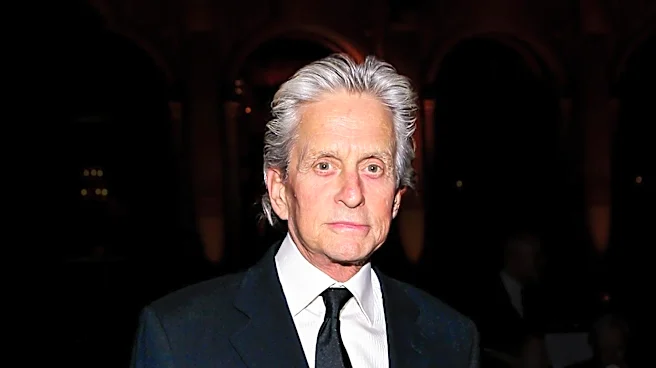
The single biggest point of contention for critics was the film’s central figure: Gordon Gekko. Michael Douglas delivered an Oscar-winning performance that was so charismatic and compelling that many critics felt he completely overshadowed the film's
intended moral. The movie was meant as a cautionary tale about the corrosion of greed, but Gekko was just too cool. Critics argued that director Oliver Stone seemed as seduced by Gekko's power, style, and silver-tongued arguments as the film's protagonist, Bud Fox. Instead of a clear condemnation, they saw a film that accidentally glamorized the very world of predatory capitalism it was supposed to be attacking, making the ultimate message feel confused and contradictory.
The 'Greed Is Good' Conundrum
Gekko's most famous line, "greed, for lack of a better word, is good," was intended as satire—a distillation of a corrupt philosophy from a villain's perspective. It was reportedly inspired by a real-life commencement speech given by convicted arbitrageur Ivan Boesky. However, at the time of the film's release, many reviewers felt the speech landed not as satire, but as the movie's unintentional thesis. They saw it as the powerful center of a film whose supposed heroes were bland by comparison. The Washington Post described Gekko as a "lizardly villain in Money Hell," yet the force of his worldview was so potent it threatened to become an advertisement for the ethos it was meant to critique. The line was so powerful it escaped the film to become a genuine mantra for a generation of aspiring financiers, a result Stone likely never intended.
Heavy-Handed and 'Wretchedly Written'
Beyond the mixed messaging, some of the era's most respected critics simply found the filmmaking clumsy. Oliver Stone, then famous for the gritty realism of "Platoon," was accused of trading subtlety for a sledgehammer. Some reviews labeled the film as agitprop, laden with "economic baby talk" and simplistic moralizing. Vincent Canby of The New York Times, while praising Douglas's performance, was largely critical of the movie itself. The Los Angeles Times review was particularly harsh, calling the female roles "wretchedly written and directed" and describing the film as a "brave, simplistic show of movie-making razzle-dazzle" that was fun for a while but ultimately shallow. This view saw the film not as a nuanced critique, but as a flashy, preachy, and ultimately hollow exercise.
A Legacy Outlasting the Reviews
So how did a film with such a divided critical reception become a cultural touchstone? Time was on its side. While some prominent critics like Roger Ebert praised it from the start for making complex financial dealings understandable, its true power became more apparent later. The film's themes of corporate raiding, insider trading, and the battle between short-term profit and long-term stability became increasingly relevant after the 1987 stock market crash and subsequent financial crises. Gordon Gekko transformed from a simple villain into an enduring, albeit problematic, cultural icon. His pronouncements on wealth and power, once seen by critics as part of a muddled message, became prescient soundbites that perfectly captured the spirit of an age. The film's legacy is proof that sometimes, a movie's cultural importance isn't fully clear until long after the opening weekend reviews are filed.