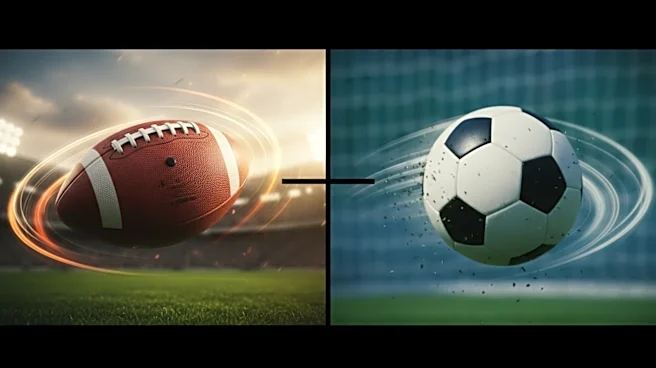





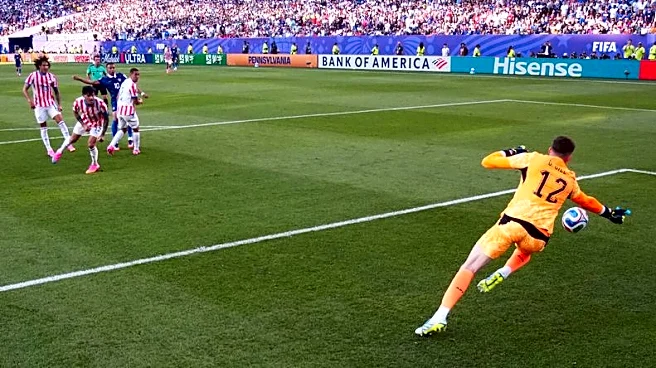


The Anatomy of On-Field Chaos
In American football, chaos is a collapsing pocket. It’s when the three seconds of pristine order you’re allotted after the snap evaporate, and 300-pound linemen break through, hellbent on turning a quarterback into a footnote. The playbook becomes irrelevant,
the carefully drawn X's and O's dissolving into a frantic scramble for survival. In soccer, chaos is different but no less intense. It’s a packed midfield where ten players fight for inches of turf, a desperate counter-attack where defenders are sprinting back toward their own goal, or the penalty box during a set piece, a thicket of bodies where a single touch can decide a match. In both worlds, most players falter. The system fails, and instinct takes over—often with messy results. But for a select few, this is not the end of the play; it's the beginning.
The Kansas City Illusionist
Patrick Mahomes is the modern master of turning gridiron chaos into offensive art. His entire highlight reel is built on plays that have gone horribly wrong. The pocket breaks, he scrambles backward, spins away from a defender, and then—at the last possible second, while running full speed to his left—he’ll flick his wrist and deliver a no-look pass 30 yards downfield to a receiver who has broken off his own route. Coaches from previous eras would have tried to tame this instinct, to force him to stay within the system and throw the ball away. But Mahomes has proven that his greatest strength lies in this off-script genius. His background as a baseball shortstop informs his ability to throw from any arm angle, a skill he uses to find passing lanes no one else can see. He doesn't just manage chaos; he thrives in it, using the defense's aggression against them to conjure magic from thin air.
The World Cup's Conductors
As the 2026 World Cup knockout rounds heat up, we’re seeing the soccer equivalent on the global stage. Players like England's Jude Bellingham and Germany's Jamal Musiala are not just participants; they are conductors of chaos. Musiala possesses a startling dribbling ability, navigating through forests of defenders in tight spaces as if the ball were glued to his feet. He draws multiple opponents, creating disorder in the defensive shape, only to then slide a perfect pass into the space he just created for a teammate. Bellingham combines this technical wizardry with immense power and game intelligence. He can carry the ball through midfield, breaking lines and turning defense into attack in an instant, but he also possesses the vision to arrive late in the box, finding a pocket of space no one knew was there until he scores from it. They don't just follow the team's tactics; they elevate them by improvising solutions in real-time.
A Shared Language of Vision
What links a gunslinging quarterback and a midfield maestro? A unique form of intelligence: spatial awareness. Elite playmakers seem to see the field from a different vantage point, processing information faster than their peers. Before the ball is even snapped, Mahomes is reading the safeties' positions. Before a pass comes their way, players like Bellingham and Musiala are scanning their surroundings constantly, creating a mental map of teammates, opponents, and open space. This isn't just physical talent; it's a cognitive gift. It’s the ability to see the play not as it is, but as it could be. They see the gap that will open in two seconds, the run a teammate is about to make, the trajectory of a defender that can be exploited with a subtle feint or a sudden change of pace. This shared language isn't spoken in words but in movement, anticipation, and the audacity to attempt the unexpected.