







The Playa Before Paris
For decades, Burning Man was a haven for the counter-culture, tech pioneers, and genuine bohemians. Fashion, such as it was, prioritized function and radical self-expression over polish. Outfits were often DIY, practical for desert survival, or simply
non-existent. Think dusty combat boots, utility vests, and handmade creations designed for participation, not observation. While celebrities had attended before the mid-2010s—figures like Susan Sarandon and tech billionaires such as Elon Musk and the Google founders were known to be regulars—their presence was more about assimilation than spectacle. They went to experience the event, not to be the event. The idea of a curated, camera-ready "Burning Man look" for mass consumption simply wasn't part of the culture.
The 2016 Intervention
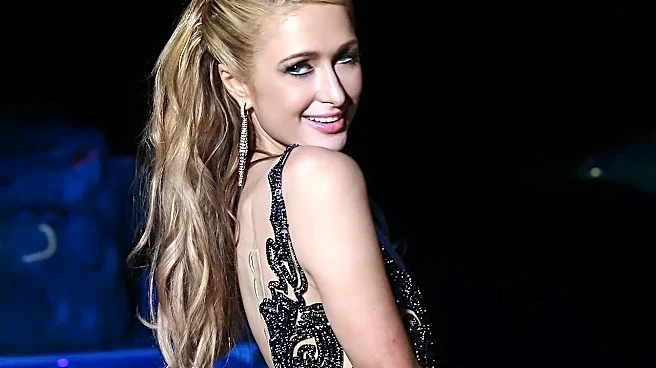
Everything shifted in August 2016 when Paris Hilton, a master of self-documentation from the reality TV era, made her first trip to the playa. She didn't just attend; she produced her attendance for her millions of followers. She arrived by private jet and immediately began broadcasting a stream of highly stylized content. Her posts featured perfectly executed braided hair, a neon alien-print bodysuit, and poses with other models like Cara Delevingne. While other celebrities were there, Hilton treated the desert not as a temporary city for decommodification, but as a backdrop for a fashion shoot, complete with hashtags and video vignettes. This approach was novel. It translated the anti-establishment chaos of Burning Man into a visual language her mainstream audience could understand: a festival, like Coachella, but with a cooler, edgier aesthetic.
The Instagram-Ready Revolution
Hilton's timing was perfect. By 2016, Instagram was cementing its place as the dominant platform for celebrity culture. Her visit provided a template for how to leverage Burning Man for brand-building and content creation. She demonstrated that you didn't need to understand the event's ten principles to get a great photo out of it. Her highly shareable, visually digestible version of the event created a feedback loop. Other celebrities and influencers saw the engagement and followed suit in subsequent years, arriving with pre-planned, camera-ready outfits. The style—a mix of futuristic metallics, faux fur coats, chunky platform boots, and elaborate goggles—became codified. It was less about self-reliance and more about creating an easily identifiable, post-apocalyptic chic look that performed well online. This shift eventually prompted a backlash from the Burning Man organization itself, which decried the rise of consumerism and influencer culture.
The New Desert Uniform
Today, the celebrity pilgrimage to Burning Man is an expected part of the annual pop culture calendar. The aesthetic Hilton helped popularize has become a full-blown commercial category. Online stores now sell dedicated "Burning Man" collections featuring rhinestone bodysuits, sequined jumpsuits, and holographic sets. The style is so established that it's become a uniform: part Mad Max, part space-age warrior, all designed to stand out in a photo. Celebrities like Heidi Klum, Karlie Kloss, and Alessandra Ambrosio have all become staples, showcasing looks that feel more like costume pieces than personal expressions. What began as an organic, anti-establishment gathering has, through the lens of celebrity and social media, spawned a predictable and shoppable style. Paris Hilton didn't do it alone, but she was the catalyst, the one who showed everyone else how to turn the playa into a runway.