






The Wicked films had to serve many masters: fans of the books, lovers of the Broadway show, and everyone who grew up with the 1939 classic. The result is a story that brilliantly weaves together established Oz lore with popular fan theories.
The Wizard and I... and My Mother?
One of the
longest-running questions in the 'Wicked' fandom is about Elphaba's parentage. While her mother was married to the governor of Munchkinland, the story has always hinted at an affair. The movie dives into this headfirst, confirming a popular fan theory: the Wizard is Elphaba’s biological father. The story reveals that Elphaba’s mother, Melena, had an affair with a mysterious traveler who gave her a green 'Miracle Elixir'. This traveler was none other than the Wizard himself, arriving in Oz via hot air balloon. This detail not only explains Elphaba's green skin but also her innate magical abilities, connecting her directly to the man who would become her greatest adversary. The film cleverly frames the song 'The Wizard and I' as a young woman's yearning for a father figure she never knew she had.
The Tale of the Silver Slippers
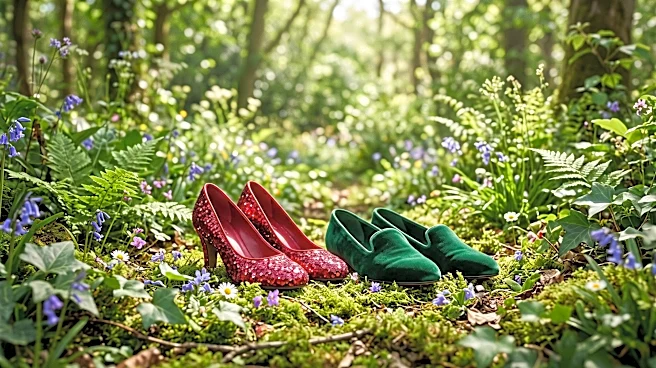
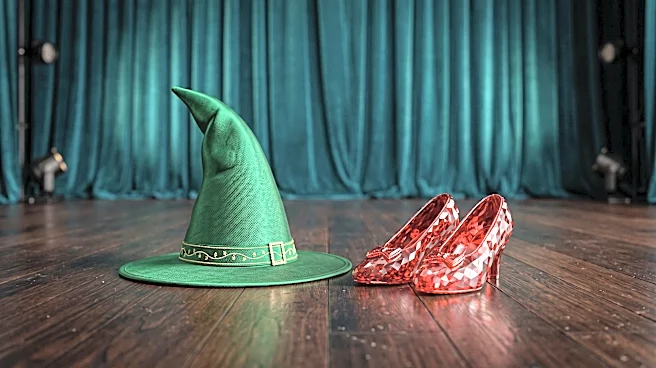
Anyone who has seen 'The Wizard of Oz' knows about the ruby slippers. But fans of L. Frank Baum's original books know they were originally silver. The 'Wicked' films cleverly bridge this gap. Nessarose, Elphaba’s sister, is gifted a pair of ornate, jeweled silver shoes. The design of the movie's shoes even includes a tornado-shaped heel, a direct nod to how Dorothy eventually arrives in Oz. In a fun easter egg moment during the song 'Popular,' Glinda even picks up a pair of red shoes and clicks the heels together before tossing them aside. By making Nessarose's shoes silver, the film honors the original books while still acknowledging the iconic ruby slippers that would later define her cinematic legacy as the Wicked Witch of the East.
Not All Animals Are Equal
A central conflict in 'Wicked' is the political suppression of the talking Animals (with a capital 'A') of Oz. This storyline provides crucial backstory for one of Dorothy’s most famous companions. In a key classroom scene, Elphaba and Fiyero rescue a terrified lion cub who is being experimented on, revealing that he cannot speak. This cub is, of course, the future Cowardly Lion. His trauma at the hands of the Wizard’s regime explains why he would later seek courage. The film uses the Animals' plight to reframe the Oz we know, turning it from a whimsical fantasy land into a place of political intrigue and oppression, with Elphaba positioned as a revolutionary activist rather than a simple villain. Her fight for Animal rights is what ultimately puts her on a collision course with the Wizard.
The Man Behind the Straw
Perhaps the most significant retcon in 'Wicked' is the origin story of the Scarecrow. In the musical, it's revealed that Elphaba’s love interest, the carefree Prince Fiyero, becomes the brain-seeking friend Dorothy meets on the Yellow Brick Road. The movie leans heavily into this with plenty of foreshadowing. After Fiyero helps Elphaba escape the Wizard's guards, he is captured and sentenced to be tortured. In a desperate act, Elphaba casts a protection spell from her book of magic, transforming him so that he cannot feel pain. This act accidentally turns him into the Scarecrow. This twist completely changes his role in 'The Wizard of Oz'; his journey with Dorothy becomes a cover, a way to navigate Oz and eventually reunite with Elphaba, with whom he escapes at the end of the story.
Redefining 'Good'
The entire premise of 'Wicked' is to challenge the black_and_white morality of the 1939 film. Nowhere is this clearer than in the journey of Glinda the Good. The movie, especially with its second part titled 'For Good', focuses on Glinda’s evolution from a vapidly 'Popular' socialite to a complicated leader making difficult choices. She becomes a public figurehead for the Wizard's regime, forced to smile and wave while grappling with the truth about what's happening in Oz. The story suggests that being 'good' isn't about being perfect or beloved, but about doing the right thing, even when it's hard. By the end, Glinda must carry the weight of Elphaba's legacy, ruling a land that will never know the full truth of her friend's sacrifice.