



A Time Machine for Your Brain
The magic starts with a psychological phenomenon that feels deeply personal: nostalgia. Music is one of the most powerful triggers for what researchers call autobiographical memory. A song from your high school days doesn't just remind you of the past;
it can transport you back, reactivating the emotions and even the sensory details of that time. Neuroscience shows that when we hear a familiar tune from our youth, our brains fire up in regions associated with memory and emotion, like the hippocampus and prefrontal cortex. This process is so potent that musical memory is often preserved even when other forms of memory fade. That throwback anthem isn't just a song; it's a key that unlocks a vivid, personal highlight reel, creating an instant positive emotional state. It reinforces our sense of self by connecting our past and present.
The Science of Singing Together
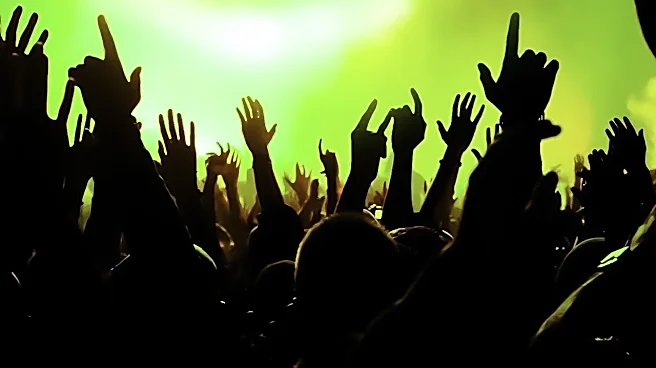
While nostalgia is a personal trip, its effect becomes exponential in a crowd. This is where sociology comes in, with a concept called "collective effervescence." Coined by sociologist Émile Durkheim over a century ago, it describes the electric feeling of unity that arises when a group comes together in a shared activity and emotion. Originally used to describe religious rituals, it perfectly captures the high of a festival crowd singing in unison. When thousands of people share the same emotional response to a song—belting out a chorus they all know by heart—they cease to be individuals and become part of a temporary, euphoric community. The act of singing together has been shown to foster social connectedness and a sense of belonging. This shared experience creates a powerful social bond, turning strangers into a cohesive unit for the duration of the song.
The Anatomy of an Anthem
Not just any old song will do. The tracks that achieve this festival-wide communion are almost always true anthems. Anthemic songs have a specific formula that makes them perfect for a crowd. Lyrically, they often touch on universal themes—hope, defiance, celebration, or the bittersweet passage of time—that resonate with a large group of people. Musically, they are built for participation. They feature a simple, strong chorus that is easy to learn and hard to resist singing. The melody is often uplifting, with a prominent, memorable high point in the chorus. Think of the simple, powerful progression of Journey’s “Don’t Stop Believin’” or the defiant shout-along quality of Twisted Sister’s “We’re Not Gonna Take It.” These songs are structurally designed to be sung badly but with great enthusiasm by a massive group.
A Shared Cultural Touchstone
Ultimately, a throwback song works because it's a piece of shared history. In a fragmented modern world, a song that everyone of a certain age knows provides a rare moment of common ground. It's a cultural artifact that has been woven into the fabric of millions of lives through radio play, movie soundtracks, and high school dances. When a DJ drops that song, it’s not just playing music; it’s activating a shared cultural memory. For that three-to-four-minute span, differences in background, belief, and style dissolve. Everyone in the crowd has a relationship with that song, creating an instant, unspoken understanding. It's a reminder that beneath our individual experiences, we share a collective soundtrack. The song becomes a temporary symbol for the group itself, a celebratory expression of being in that place, at that time, together.