

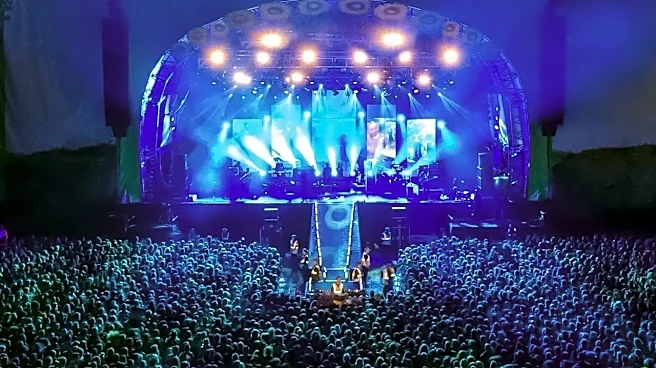
A Stage for Modern Myths
More than any other music festival in America, Newport Folk is a machine for generating “I was there when…” moments. Its entire history is built on a foundation of legendary surprises and pivotal turning points in music history. It’s where a teenage Joan
Baez made her surprise debut in 1959, instantly becoming a star. It’s where Johnny Cash, in 1969, insisted that a young, unknown songwriter named Kris Kristofferson be allowed to join him on stage, launching a storied career. And most famously, it’s where Bob Dylan plugged in his guitar in 1965, an act that sent shockwaves through the folk community and fundamentally altered the course of popular music. These aren't just concerts; they are historical events. When your friend tells you about the time Joni Mitchell returned to the stage in 2022 for her first full performance in two decades, they aren't just recounting a setlist. They are placing themselves inside a living, breathing piece of music history, and the story naturally gains weight and wonder.
The Cult of Collaboration
At most festivals, the lineup is the lineup. At Newport, the lineup is merely a suggestion. The festival's defining characteristic is its culture of spontaneous, cross-pollinating collaboration. It’s a place where artists don't just play their sets and leave; they roam the grounds, join each other on stage, and create one-time-only supergroups. One year, Dolly Parton might be a secret guest of The Highwomen. Another might feature a tribute to Bill Withers with a dream-team band or have members of the Preservation Hall Jazz Band backing a review of protest songs. This spirit creates an atmosphere of constant possibility. The audience knows that at any moment, a legend like Mavis Staples might walk out to join a younger band mid-song, or Roger Waters could appear for a powerful guest spot. This element of surprise means every performance feels unique and unrepeatable. The story of seeing your favorite artist is good; the story of seeing them joined by three other surprise favorites is a tale you’ll dine out on for years.
The Fort Adams Feedback Loop
The venue itself plays a crucial role. Held at Fort Adams State Park, the festival is surrounded by the historic stone walls of a 19th-century fort and the sparkling backdrop of Newport Harbor. It feels separate from the everyday world, creating an immersive experience where the outside melts away. Unlike sprawling, chaotic festivals, Newport has a more intimate footprint and a community vibe. Fans are known for being deeply respectful and attentive, and artists often mingle with the crowd. This shared, positive atmosphere is fertile ground for creating powerful memories. Psychologically, emotional, shared experiences are encoded more deeply in our minds. When you and your friends experience a transcendent musical moment together in such a unique setting, you form a collective memory. Each time that memory is retold, it's collectively polished, with small details sharpened and the emotional highs amplified. The story isn't just being remembered; it's being burnished by the group that shares it.
It's About More Than Music
From its inception, Newport has been intertwined with social and political commentary. In the 1960s, it was a vital platform for the Civil Rights and anti-war movements, with artists like Pete Seeger and Joan Baez leading marches and performing protest anthems. That legacy continues today, with artists frequently using the Newport stage to address contemporary issues. This gives the performances a sense of purpose and weight. It’s not just entertainment; it’s a community gathering to reflect on the world. This depth adds another layer to the stories. A memory of a powerful song becomes a memory of collective action and shared values. When a friend recounts the moment the crowd sang along to a revived protest anthem, they’re tapping into a history that’s bigger than a single weekend, connecting their experience to decades of cultural significance.