







National Hope vs. A Stanley Cup Drought
In hockey, the pressure on a Canadian team to finally bring the Stanley Cup home after decades is immense. It’s a civic burden, a collective ache you can feel from Vancouver to Halifax. Now, multiply that by an entire nation’s identity. When Lionel Messi
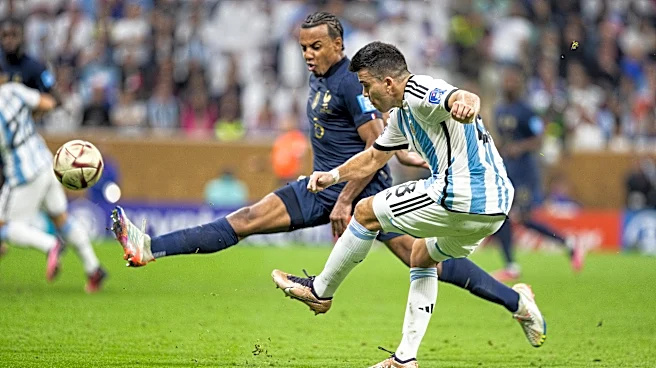
was chasing his World Cup title, he wasn’t just playing for a team; he was carrying the hopes, dreams, and anxieties of 45 million Argentinians. In countries like Brazil, England, or Germany, soccer isn’t just a sport—it's a reflection of national pride and competence. A loss can trigger a period of national mourning. Watching the World Cup means watching players perform under a weight that makes a city’s 30-year Cup drought feel almost quaint. It's the pressure of being a national hero or a national scapegoat, with very little room in between.
The Penalty Shootout vs. Game 7 Overtime
There is no purer distillation of sports pressure than a Game 7 overtime. Every shot, every save, every turnover feels like it could end everything. The soccer equivalent is the penalty shootout. After 120 minutes of grueling play, the world’s biggest prize is decided by a series of one-on-one showdowns from 12 yards out. It’s a goalie and a shooter, isolated from their teams, with the stadium, and billions around the world, holding their breath. Unlike a hockey shootout that decides a regular-season game, this is it. Decades of training, national aspirations, and personal legacies are compressed into a single kick. For a hockey fan, imagine the Stanley Cup Final being decided not by a golden goal in a chaotic scrum, but by a series of five breakaways. It's a brutal, psychologically torturous, and utterly captivating way to crown a champion.
The 'Golden Generation' vs. The Championship Window
Hockey fans know the concept of a “championship window.” You get a generational talent like Connor McDavid, surround him with stars like Leon Draisaitl, and the clock starts ticking. The pressure to win a Cup *now* before contracts expire or players age becomes the dominant narrative. In international soccer, this is called the “Golden Generation.” It’s when a small country suddenly produces a crop of world-class players all at the same time—think Belgium with Kevin De Bruyne and Eden Hazard, or Croatia with Luka Modrić. The World Cup becomes their only chance to validate their collective talent on the biggest stage. Because the tournament is only every four years, they may only get one or two realistic shots at glory. Every tournament carries the weight of being the last, best chance, making their journey fraught with a unique and desperate urgency.
Club vs. Country vs. The Olympics
One of the best parts of the Olympics for hockey fans is seeing NHL superstars put aside their club rivalries to unite for their country. Sidney Crosby and Claude Giroux go from bitter rivals to teammates. The World Cup is this exact dynamic, but it’s the absolute pinnacle of the sport, not just a special event. These players spend 10 months a year as highly paid employees of massive global clubs like Real Madrid or Manchester City. Then, for one month, they become patriots. Teammates become opponents, and sworn enemies link arms to sing their national anthem. This creates incredible subplots. Do they play with the same reckless abandon for their country as they do for the club that pays their salary? What happens when two club teammates face each other in a knockout game? It’s the ultimate test of identity and allegiance, played out for global bragging rights.
The Group Stage Gauntlet vs. The Playoff Grind
A seven-game playoff series is a war of attrition. You can have a bad night, lose Game 3, and still come back to win the series. It’s a marathon that rewards resilience. The World Cup group stage is a sprint where you can’t afford to stumble. With only three games to advance to the knockout rounds, a single loss can be catastrophic. A draw can feel like a defeat. Goal differential becomes a tiebreaker, meaning every goal scored and every goal conceded, even in a blowout loss, matters immensely. Imagine a playoff format where a Game 1 loss puts you on the verge of elimination. That’s the reality of the World Cup’s opening round. This structure creates a different kind of intensity—a frantic, knife-edge tension from the very first whistle of the tournament.