

The Basic Illusion: How Your Eyes Get Tricked
The core of the stripe debate lies in a classic optical illusion. When our eyes scan a pattern of broad, horizontal lines, they tend to move from side to side, taking in the full width of each stripe. This horizontal sweep can make an area seem broader
than it is. Conversely, with narrow stripes, our eyes often can't focus on a single line and instead travel up and down the pattern as if it were a ladder, creating a lengthening effect. But this is just the starting point. The real magic—or mischief—happens when you apply these flat, two-dimensional lines to a three-dimensional, curving human body.
The Chest: A Flatter Canvas for a Wider Look
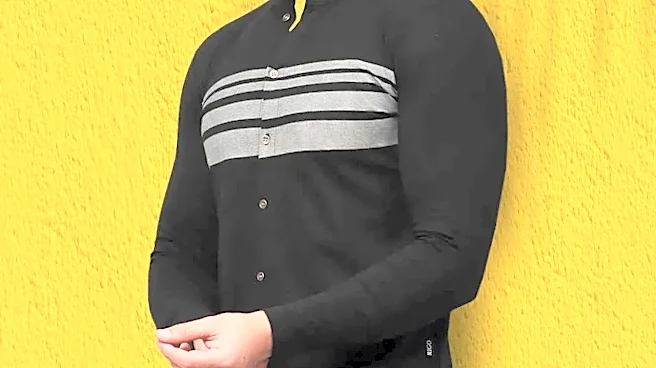
For many body types, the area across the chest and shoulders is a relatively broad and flat plane. When wide horizontal stripes are placed here, they lie mostly straight and uninterrupted. This gives the optical illusion a clean canvas to work its widening magic. Each stripe acts as a distinct horizontal band, and your eye reads their full width, which can create a powerful sense of breadth across the shoulders and bust. This is why a simple, wide-striped shirt can give a V-tapered or more athletic look; it visually enhances the natural width of the upper body. It's a straightforward application of the principle: a flat surface plus a straight line equals a predictable illusion.
The Hips and Waist: Where Curves Change the Game
Unlike the chest, the area around the hips, stomach, and waist is all about curves. A straight, horizontal stripe doesn't stay straight when it's wrapped around a curved surface; it bends and distorts. When a stripe travels over the curve of a hip or a tummy, your eye follows that bend. Instead of a simple side-to-side scan, your brain is now processing information about shape and volume. This distortion can actually break up the widening effect. A broad stripe might dip at the waist and curve prominently over the hip, essentially outlining the body's shape rather than just making it look wider. The line is no longer just a flat stripe but a contour map, highlighting the three-dimensional form beneath it.
Fit and Fabric: The Two Most Important Variables
Ultimately, the difference between a flattering stripe and an awkward one often comes down to fabric and fit. A top made of a stiff, unforgiving fabric can create a 'tent' effect, where the stripes remain straight but hang away from the body, adding bulk. Conversely, a fabric with a soft drape will follow the body's natural contours, allowing the stripes to curve and define your shape. Similarly, a very tight fit can cause stripes to stretch and warp unpleasantly, emphasizing areas in a less than ideal way. A fit that skims the body is often the sweet spot, letting the stripes interact with your curves without pulling or distorting. The old rule was never really about the stripe itself; it was about poorly chosen cuts and proportions.