


The Logical First Choice
In the world of Pixar animation, few names carry as much weight as Randy and Thomas Newman. Thomas Newman, in particular, had already crafted the distinctive, atmospheric soundscapes for Finding Nemo and WALL-E, making him a natural fit for another ambitious
Pixar project. His style, often favoring unique instrumentation and textured rhythms over soaring melodies, could have given Up a vastly different feel—perhaps more ambient, quirky, and introspective. Given the Newman family's deep-rooted history with Disney and film music, Thomas was a logical and expected choice. He was, and remains, a giant in the industry, a frequent Oscar nominee known for creating emotionally resonant and unconventional scores for films like American Beauty and The Shawshank Redemption. For a film as unique as Up, he seemed like a perfect candidate.
A Director's Intuition
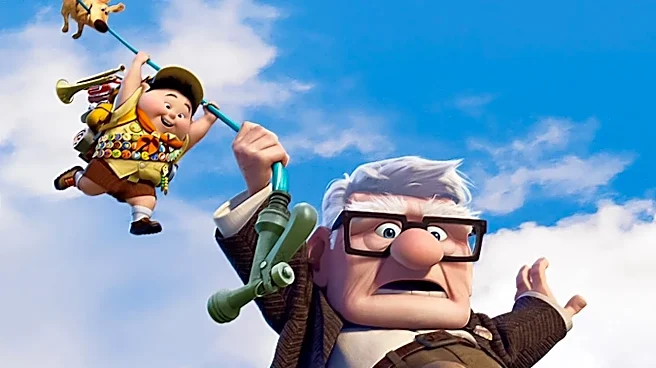
Despite Newman's pedigree, director Pete Docter had a different sound in his head. He was looking for a collaborator who could evoke the spirit of classic adventure films and old-fashioned romance. He found that in Michael Giacchino. Giacchino had already made a name for himself at Pixar with his bold, jazzy score for The Incredibles and the lush, romantic sounds of Ratatouille. Docter was impressed by Giacchino’s versatility and his approach as a storyteller, noting that he thinks like a filmmaker, using music to serve the narrative above all else. Giacchino's journey to Pixar was unconventional, beginning with scores for video games like Medal of Honor and TV shows for J.J. Abrams like Alias and Lost. This background gave him a unique ability to build character and tension through music, a skill that would prove essential for Up.
The Making of 'Married Life'
The heart of the film, and Giacchino's score, is the wordless four-minute montage known as "Married Life." It’s the sequence that tells the entire story of Carl and Ellie’s relationship, from their joyful wedding to her heartbreaking passing. Giacchino knew this would be the most difficult and important piece to compose. He has said that he tackled it first, understanding that Ellie’s theme had to carry her presence through the rest of the film. After a couple of false starts, he landed on the simple, unforgettable waltz. He intentionally kept the music gentle and quiet during the saddest moments, wanting to be reverent rather than overly dramatic. The theme starts with a nostalgic 1930s jazz feel and gracefully evolves, using a solo piano to represent Carl’s loneliness after Ellie is gone. The result is one of modern cinema’s most powerful musical moments, relying entirely on the score to convey a lifetime of love and loss.
An Unforgettable Legacy
The decision to go with Giacchino paid off spectacularly. His score for Up not only defined the film but also earned him an Academy Award, a Golden Globe, a BAFTA, and two Grammy Awards. It became the first Pixar film to win the Oscar for Best Original Score, a testament to how deeply the music connected with audiences and critics alike. The collaboration between Docter and Giacchino was so successful they would team up again for Inside Out. The story of Up's score is a powerful example of a director following his creative gut. While a version scored by Thomas Newman would have undoubtedly been brilliant in its own right, Giacchino's music became inseparable from the film's identity, a perfect match of sound and story that elevated an already great movie into an all-time classic.



![‘Avengers: Endgame Encore’ Adds 4 New Scenes Tying to ‘Doomsday’: [SPOILER] Fights Doctor Doom, [SPOILER] Travels to the Past and the Multiverse Co...](https://glance-mob.glance-cdn.com/public/cardpress/binge-magazine-card-generation/spaces/US/en/variety/images/ppid_e58d5126-image-179028507810880477.webp)
